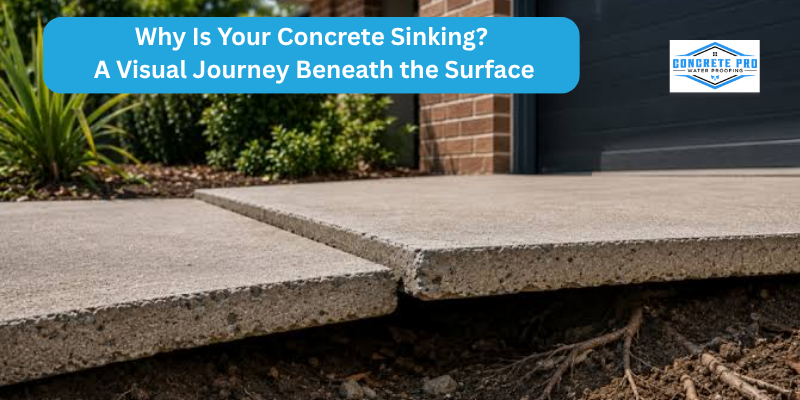
A concrete driveway, patio, sidewalk, or garage floor can look completely solid from the surface. Unlike soil or gravel, concrete gives the impression that nothing underneath it should be able to move. Yet over time, you may notice something that tells a different story—a low spot in the driveway, an uneven sidewalk panel, a crack that wasn't there before, or water collecting in a particular area after rainfall.
These changes are often blamed on the concrete itself. In reality, the concrete often responds to a problem below the surface.
Concrete is rigid, while the soil and base supporting it can change because of moisture, erosion, compaction, temperature, drainage, and other environmental conditions. When that supporting material shifts or disappears, the concrete above it can settle along with it.
A sinking concrete slab is often a visible symptom of an invisible problem underneath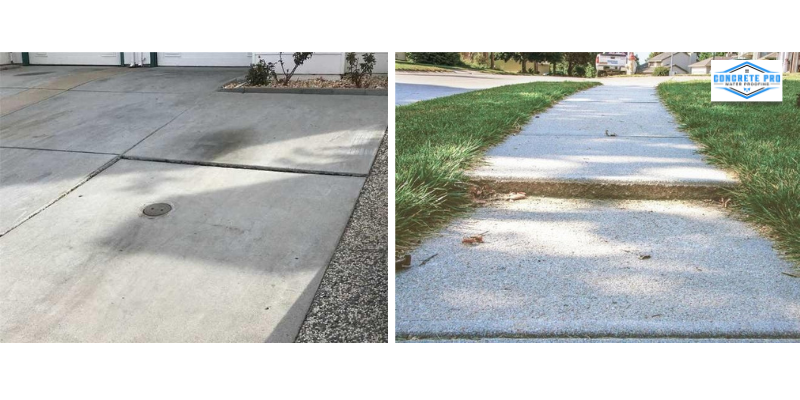 Understanding what happens beneath the surface makes it much easier to understand why concrete sinks, what warning signs to look for, and why simply repairing a crack may not always solve the underlying problem.
What Is Actually Happening Beneath Your Concrete?
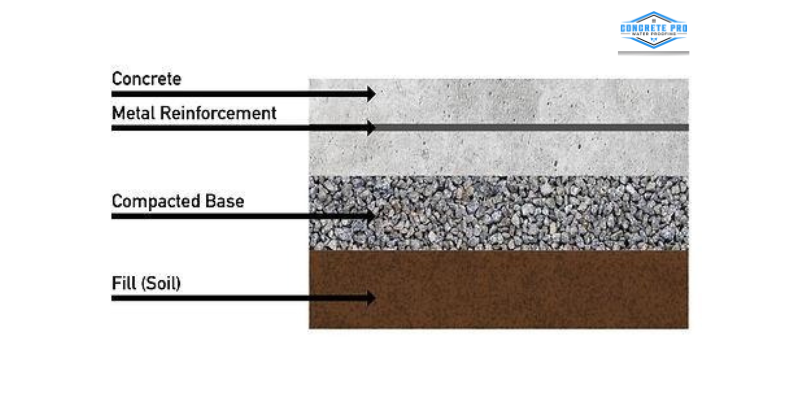
Think of a concrete slab as a rigid platform resting on several layers of material. The concrete itself is only the top part of the system. Underneath it may be a compacted base or subbase, followed by natural soil or engineered fill.
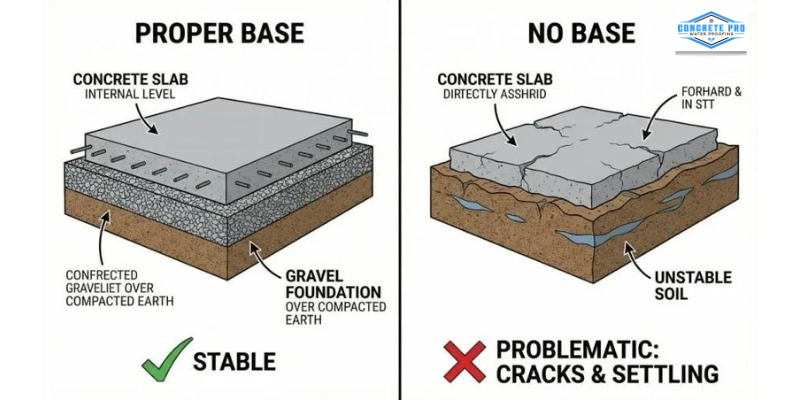
When those layers remain stable, the slab receives relatively even support. The weight of the concrete is distributed across the area beneath it, allowing the surface to remain level and functional.
The problem begins when that support changes.
If soil becomes compressed, water carries soil particles away, an underground leak creates a void, or expansive soil shrinks during a dry period, part of the slab may no longer have the same support as the surrounding area.
Because concrete is relatively rigid, it cannot simply bend and follow every small change in the ground. Instead, stress can develop within the slab, resulting in settlement, cracking, tilting, or separation from nearby surfaces.
This is why a small-looking depression in a driveway can sometimes represent a much larger issue beneath the surface.
1. Water Can Wash Away the Soil Beneath Concrete
Water is one of the most important factors to consider when investigating sinking concrete. It doesn't necessarily need to create a dramatic flood to cause problems. Repeated water movement beneath a slab can gradually alter the soil supporting it.
Rainwater may enter through cracks, joints, edges, or surrounding soil. If the area has poor drainage, water can repeatedly travel through the same path. Over time, fine soil particles may be displaced or washed away.
Once enough material disappears, a small void can form beneath the concrete.
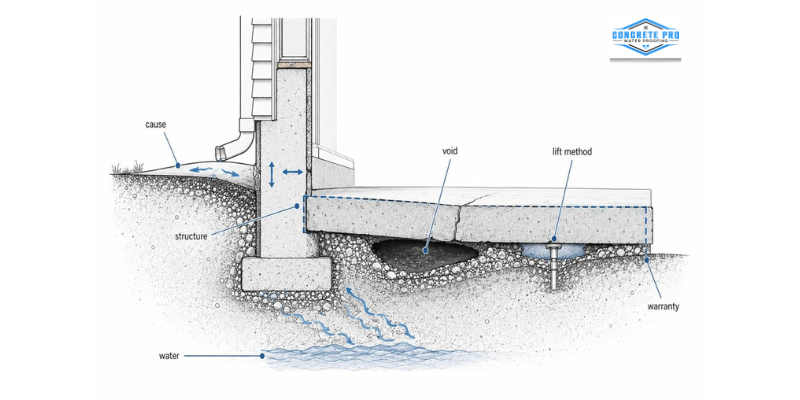
At first, you might not notice anything unusual. The surface may continue to look normal because the concrete is still spanning the area.
But eventually, the unsupported section may begin to move downward.
The sequence can be as simple as:
Water enters → soil is displaced → support decreases → void develops → slab settles
This is one reason drainage should always be considered when investigating a sinking driveway, sidewalk, patio, or other exterior concrete surface.
2. Poorly Compacted Soil Can Settle Over Time
Another common explanation begins before the concrete is even installed.
During construction or landscaping, soil may be excavated and replaced with fill material. Utility trenches may also be dug and refilled. If the replacement soil is not adequately compacted, it can contain more empty space than properly compacted soil.
Initially, the surface may appear perfectly stable.
Then the weight of the concrete, vehicles, foot traffic, and natural moisture changes gradually compress the loose material. As the soil becomes denser, the ground level can drop.
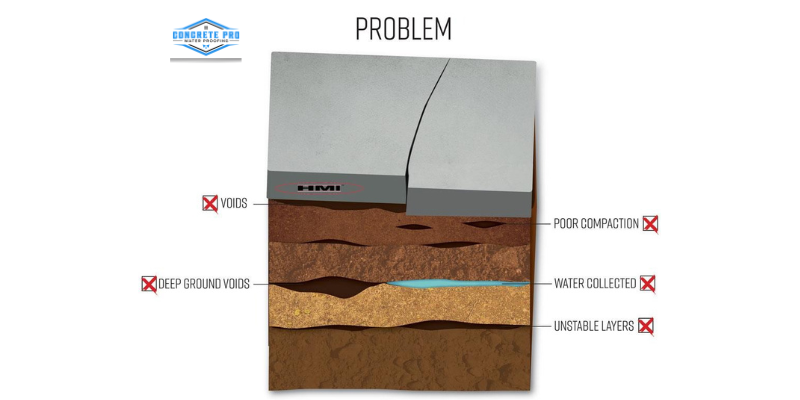
This problem is especially relevant around newer construction, home additions, driveway extensions, landscaping projects, and areas where underground utilities were installed.
If only one portion of a concrete surface sits over poorly compacted fill, that section may settle while the surrounding areas remain relatively stable.
The result is differential settlement—different parts of the same concrete surface moving by different amounts.
3. Expansive Soil Can Move With Moisture
Soil isn't a completely stationary material. Some types of soil can change volume as their moisture content changes.
Clay-rich expansive soils are particularly known for shrinking when they become dry and expanding when they absorb moisture. If a concrete slab sits on this type of soil, repeated changes in moisture can cause movement beneath the surface.
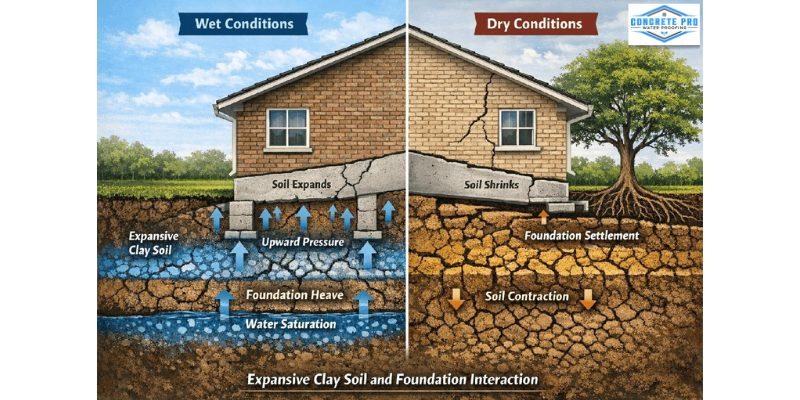
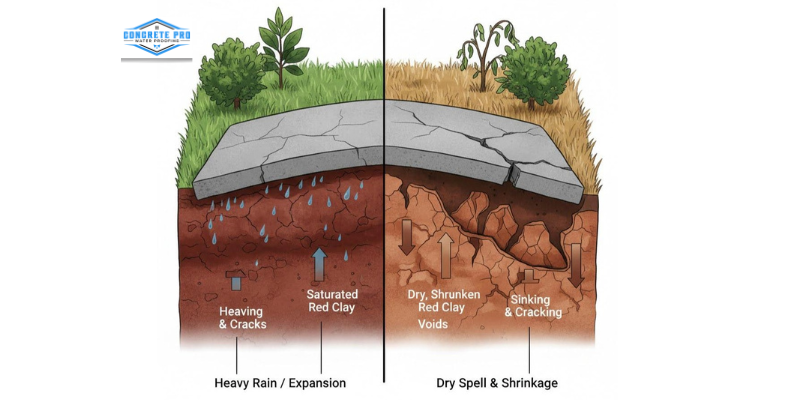
Imagine the soil underneath the slab going through a repeated cycle:
Wet → expansion → drying → shrinkage → wet again
The concrete may not move uniformly because moisture isn't always distributed evenly across the entire area.
One side of a slab may experience more moisture than another. One section may sit near a downspout, garden bed, tree, or drainage channel while another section remains relatively dry.
That difference can contribute to uneven movement and stress.
4. Poor Drainage Can Make Settlement Worse
Drainage problems deserve special attention because they can contribute to several different causes of concrete settlement at the same time.
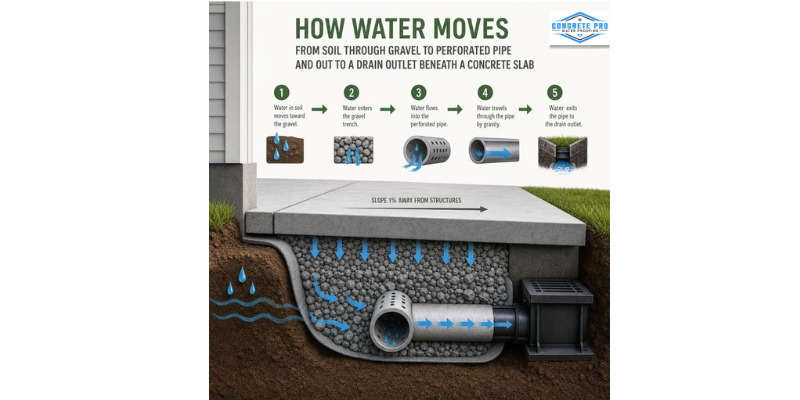
Consider a driveway where rainwater consistently flows toward one low area. If there is nowhere for that water to drain properly, the soil around and underneath the concrete may remain wet for extended periods.
Over time, this can affect the stability of the supporting material.
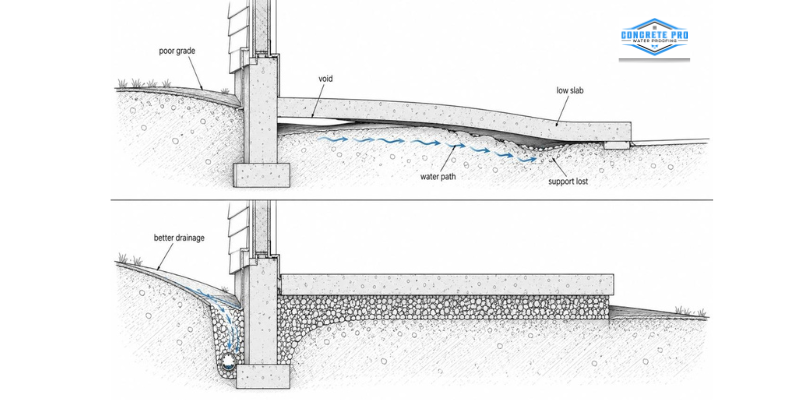
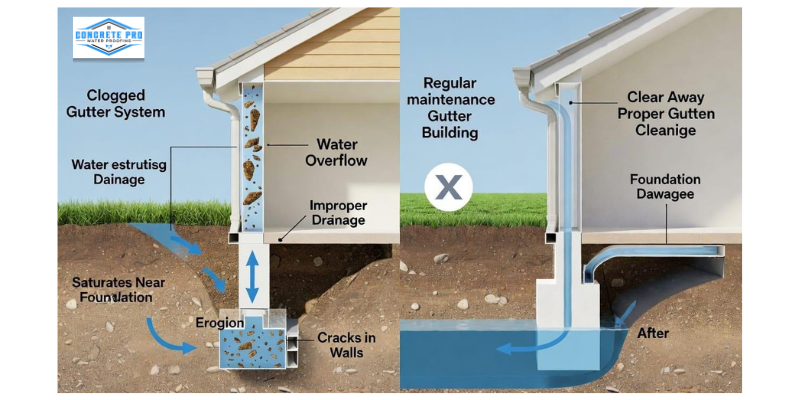
The problem can become even more noticeable after the concrete has already started settling.
A previously level slab may develop a low point. That low point then collects more water during rainfall. More water creates additional opportunity for soil movement, which can cause further settlement.
This creates a cycle:
Poor drainage → moisture accumulation → soil movement → concrete settlement → new low spot → more water accumulation
For this reason, correcting drainage may be an important part of addressing a recurring concrete settlement problem.
5. Underground Plumbing Leaks Can Create Hidden Voids
Sometimes the source of the problem isn't rainfall at all.
An underground plumbing leak can release water directly into the soil beneath a concrete slab. Because the pipe and leak are hidden, the first visible indication may actually be a change in the concrete above it.
The water can soften or erode surrounding material and gradually create a loss of support.
A homeowner might notice that one section of the floor has started to sink without realizing that water is moving underneath it.
That's why it is important to investigate the cause of settlement before choosing a repair method.
If a leaking pipe is still allowing water to escape beneath the slab, simply lifting the concrete may not address the underlying problem.
The Visual Journey: How Concrete Goes From Level to Sunken
Concrete settlement usually isn't an overnight event.
In many situations, the process develops gradually. The ground beneath the slab changes first, and the visible symptoms appear later.
Stage 1: Stable Ground
The concrete rests on properly supported material. The base and soil provide relatively consistent support across the slab.
Concrete slab -> Compacted base -> Stable soil
At this point, everything appears normal.
Stage 2: Support Begins to Change
Water movement, poor compaction, soil shrinkage, erosion, or another factor begins affecting the material underneath.
The change may be too small to notice from the surface.
Stage 3: A Void or Weak Area Develops
Part of the supporting material becomes weaker or disappears.
The concrete may still look normal because the slab can temporarily bridge the unsupported area.
Stage 4: The Slab Starts Moving
Eventually, the unsupported section can settle downward.
This is when cracks, uneven joints, gaps, and slopes may become noticeable.
Stage 5: The Surface Shows the Problem
Now the original underground problem becomes visible.
You may see:
- Uneven slabs
- Cracks
- Low spots
- Gaps
- Standing water
- Trip hazards
- Separation from adjacent structures
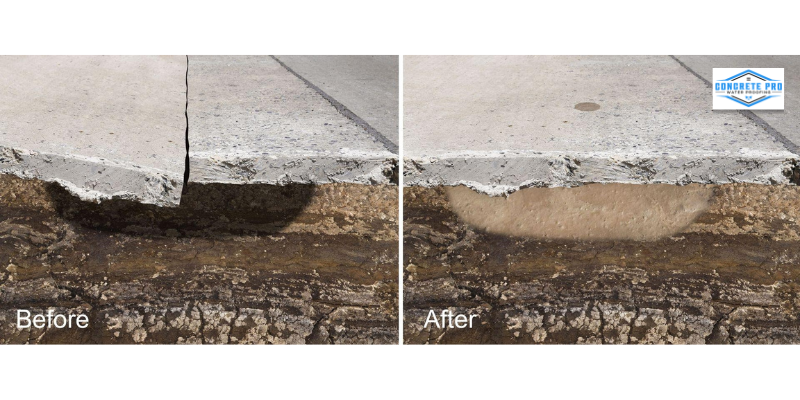
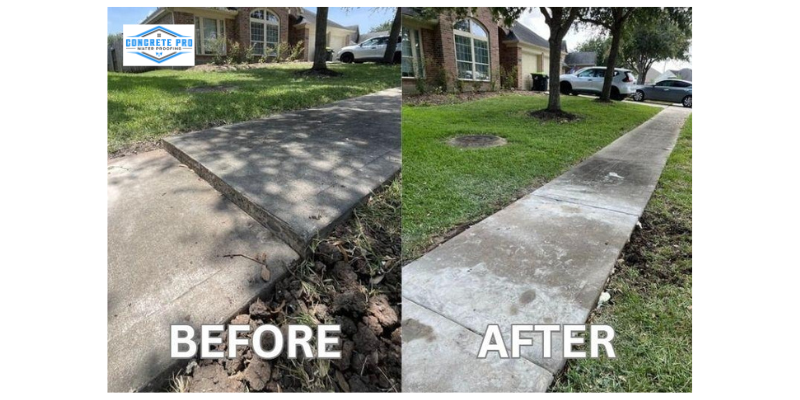
The important takeaway is that the visible damage is often the final stage of a process that started below the surface.
What Does Sinking Concrete Actually Look Like?
Not every sinking slab looks dramatically damaged.
Sometimes the first indication is a very subtle change in elevation. One part of a driveway may sit slightly lower than another. A sidewalk joint may suddenly feel uneven beneath your foot. Water may start collecting in an area that previously drained normally.
These small changes are worth paying attention to because settlement can continue if the underlying condition remains.
Uneven Concrete Slabs
Uneven slabs are one of the easiest signs to recognize.
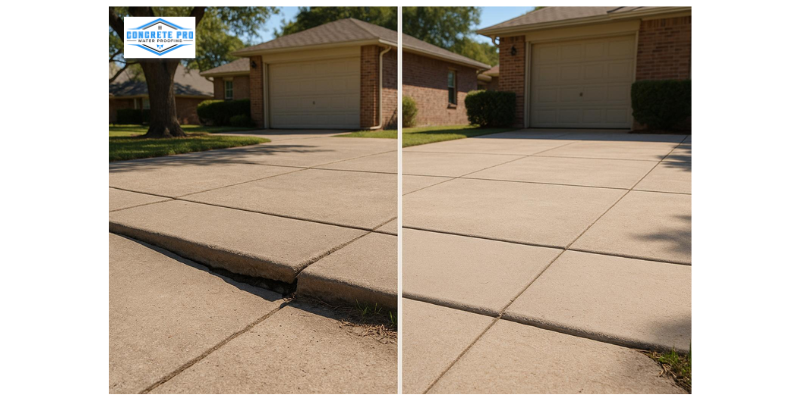
You may notice that two adjacent concrete sections no longer meet at the same height. The difference might initially be small, but it can become more noticeable over time.
Cracks
Cracks can occur for many reasons, so cracking alone doesn't prove that a slab is sinking. However, cracks combined with uneven elevation, gaps, or visible settlement provide a stronger indication that movement may be occurring beneath the concrete.
Gaps Along Edges
A sinking slab can pull away from nearby structures or leave a visible gap along its edge. These gaps may appear next to steps, curbs, garage floors, foundations, or other concrete surfaces.
Water Pooling
Water pooling is another useful clue. If rainwater consistently collects in a particular depression, the surface may have changed elevation.
Trip Hazards
When one concrete panel settles lower than the next, the difference in height creates an uneven transition. On sidewalks and walkways, even a relatively small change can become a safety concern.
Does Cracked Concrete Always Mean It Is Sinking?
No.
This is an important distinction because concrete cracks for many different reasons.
Concrete can develop cracks from drying shrinkage, temperature changes, loading, material issues, movement, and other factors. A crack by itself doesn't necessarily mean there is a void underneath the slab.
The better question is:
Are there other signs of movement?
If the crack appears together with a low spot, uneven joint, gap, drainage issue, or visible change in elevation, the possibility of settlement deserves closer attention.
This is why simply filling a crack may not solve the problem.
If the concrete is continuing to move because the soil beneath it is unstable, the crack can return even after it has been repaired.
How Is Sunken Concrete Repaired?
The appropriate repair depends on several factors, including the condition of the slab, the amount of settlement, the cause of the movement, the soil conditions, and whether the concrete itself remains suitable for repair.
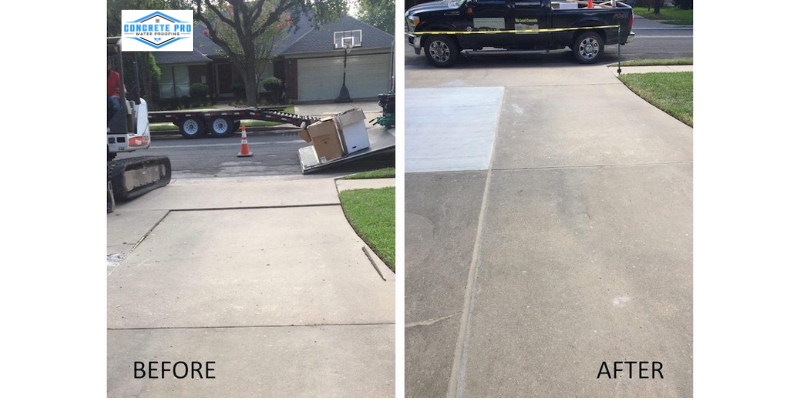
In some situations, the existing concrete can be lifted and stabilized instead of completely removed.
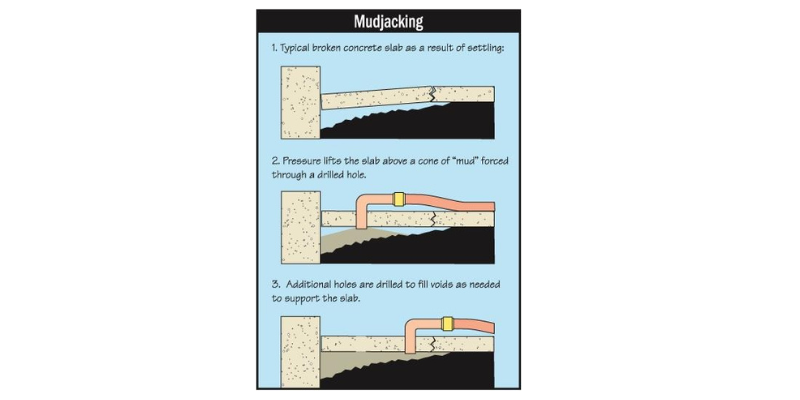
One approach is slab jacking, where material is injected beneath the slab to fill voids and raise the concrete.
Modern concrete lifting can involve carefully placed injection points. The repair material is introduced beneath the slab and used to fill empty spaces or gradually raise the concrete.
Polyurethane foam is one material used for concrete lifting applications. Cementitious grout can also be used in slab-jacking applications.
The goal isn't simply to push the concrete upward as quickly as possible. Controlled lifting is important because excessive or uneven pressure can create additional problems.
Why Fixing the Cause Matters More Than Fixing the Symptom
Imagine a driveway has sunk because water has been repeatedly washing soil away from underneath it.
The slab is lifted back into position, but the drainage problem remains.
The driveway may look perfect immediately after the repair. But if the same water continues moving beneath it, the supporting material can be affected again.
That's why a good repair strategy starts with understanding what caused the settlement.
The complete system needs to be considered:
Concrete -> Base / subbase -> Soil -> Drainage -> Water sources
A concrete repair may restore the surface, but addressing the underlying condition helps reduce the possibility of the same problem returning.
Can You Prevent Concrete From Sinking?
There isn't a single way to guarantee that concrete will never settle. Soil conditions, weather, drainage, construction conditions, and other factors can all affect long-term performance.
However, proper preparation and maintenance can significantly reduce avoidable problems.
One of the most important steps is preparing the supporting soil correctly before concrete is installed. Proper grading, suitable base materials, and adequate compaction can help provide more uniform support.
Drainage is equally important.
Water should have a controlled path away from the concrete rather than being allowed to repeatedly collect around its edges or underneath the slab.
Regular inspection can also help identify problems early.
If you notice a new depression, crack, gap, or drainage change, investigating it early may help prevent a relatively small issue from becoming a much larger repair.
When Should You Have Sinking Concrete Inspected?
A small change doesn't always mean that major structural work is required. However, certain signs deserve professional attention.
If a concrete slab is visibly sinking, if adjacent sections have developed a significant height difference, or if cracks are becoming wider or more numerous, an inspection can help determine what is happening underneath.
The same applies when water repeatedly pools in the same location or when there are visible gaps beneath a slab.
It's particularly important to investigate settlement when the concrete is located near a building, foundation, retaining structure, or other area where continued soil movement could create additional concerns.
The objective of an inspection isn't simply to decide whether the concrete should be lifted. It is to understand why it moved and whether the supporting conditions are likely to remain stable.
Conclusion: The Problem Usually Starts Beneath the Surface
When concrete starts sinking, cracking, or becoming uneven, the visible damage is often only the final sign of a problem that has been developing underneath. Water erosion, poor soil compaction, drainage issues, soil movement, and underground leaks can all reduce the support a concrete slab depends on.
That’s why simply repairing the crack or filling the low spot may not be enough. The long-term solution starts with identifying what caused the concrete to settle in the first place.
Once the underlying issue is understood, the right repair method can help restore the slab and reduce the chances of the problem returning.
So, the next time you notice a sinking driveway, uneven sidewalk, or sunken patio, don't just look at the concrete. Look beneath it. The real story—and the real solution—may be hidden below the surface.