
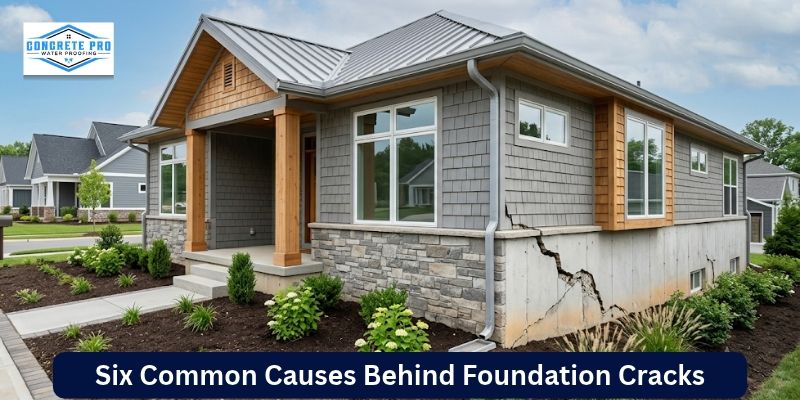
You noticed a thin line running down your basement wall. Maybe it appeared after a week of heavy rain, or perhaps you spotted it while cleaning the garage. At first, it looked harmless. But now you're wondering: Is my foundation okay, or is this crack trying to tell me something?
Foundation cracks can be unsettling, especially when you don't know what caused them. The good news is that not every crack signals a serious structural problem. Some develop naturally as concrete cures, while others may point to soil movement, water pressure, drainage issues, or construction defects.
The challenge is knowing the difference.
Understanding the reasons behind foundation cracks can help you recognize potential warning signs, avoid unnecessary repairs, and determine when professional attention is needed. Let's explore six common causes of foundation cracks, what they look like, and what homeowners can do about them.
1. Soil Movement: When the Ground Beneath Your Home Shifts
Your home's foundation depends on the ground beneath it for stable support. But soil isn't always as solid and predictable as it appears. Changes in moisture, soil composition, and ground conditions can cause the earth to expand, contract, or shift, placing stress on the foundation above it.
Clay-rich soil is particularly sensitive to moisture. When it absorbs water, it expands. During dry weather, it loses moisture and contracts. Over time, these repeated changes can affect the stability of the foundation, especially when different sections of the building experience different levels of movement.
Poorly compacted soil can create similar problems. If the ground beneath a foundation settles unevenly, one section of the structure may move more than another. This is known as differential settlement, and it can lead to cracks in foundation walls, interior walls, and concrete floors.
What to look for:
- Diagonal cracks extending from the corners of windows or doors.
- Cracks that gradually become wider or longer.
- Uneven floors or gaps between walls and ceilings.
- Doors and windows that suddenly stick or fail to close properly.
What can help? The first step is identifying whether the soil is still moving and why. A foundation professional can assess the crack pattern, surrounding ground conditions, and signs of settlement before recommending an appropriate repair.
2. Poor Drainage: When Water Becomes a Foundation Problem
Water is essential for your home, but when it collects around the foundation, it can create problems that aren't immediately visible.
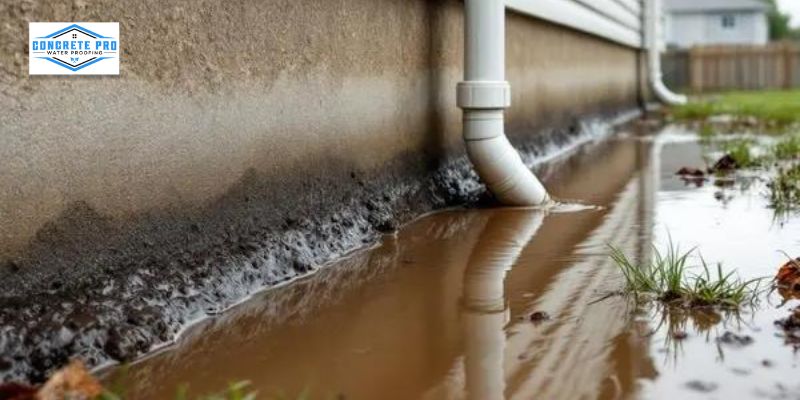
Imagine a downspout releasing rainwater directly beside your house. After repeated rainfall, the surrounding soil becomes saturated. Depending on the soil type and drainage conditions, this water can increase pressure against foundation walls, affect the ground's ability to support the structure, or contribute to uneven soil movement.
Poor drainage doesn't always cause immediate foundation damage. In many cases, the problem develops gradually as water repeatedly accumulates in the same area.
Common drainage problems include:
- Clogged gutters that overflow during rainfall.
- Downspouts that release water too close to the foundation.
- Yard grading that directs water toward the house.
- Low spots where rainwater collects near exterior walls.
- Damaged or blocked drainage systems.
A simple preventive step: Check where rainwater goes when it leaves your roof. Keep gutters clear, direct downspouts away from the foundation, and make sure the ground slopes away from the home where practical.
If water continues to collect around the property or enters the basement, a drainage assessment may be necessary.
Remember: Sealing a visible crack without addressing the source of the water may not prevent the problem from returning.
3. Concrete Shrinkage: When Cracks Develop Naturally
Sometimes, a foundation crack has less to do with the ground and more to do with the concrete itself.
Concrete changes as it hardens and dries. During curing and subsequent drying, it can shrink slightly. If the concrete cannot move freely because of reinforcement, adjoining materials, or other restraints, internal stress may cause small cracks to form.
These are commonly known as shrinkage cracks. They can appear in foundation walls, slabs, and other concrete surfaces, particularly during the early stages of a building's life.
In many cases, shrinkage cracks remain narrow and stable. However, their appearance alone cannot confirm that they are harmless.
Typical signs include:
- Fine, narrow cracks in concrete surfaces.
- Cracks that appear relatively soon after construction.
- No noticeable displacement between the two sides.
- No accompanying signs of significant structural movement.
How can the risk be reduced? Appropriate concrete mix design, proper placement, suitable curing practices, and correctly designed control joints can help manage shrinkage-related cracking.
If a crack begins to widen, allows water to enter, or appears alongside other signs of movement, have it assessed rather than assuming it is a normal part of concrete curing.
4. Hydrostatic Pressure: When Water Pushes Against Foundation Walls
For homes with basements or below-ground walls, water can create pressure that isn't always visible from inside the house.
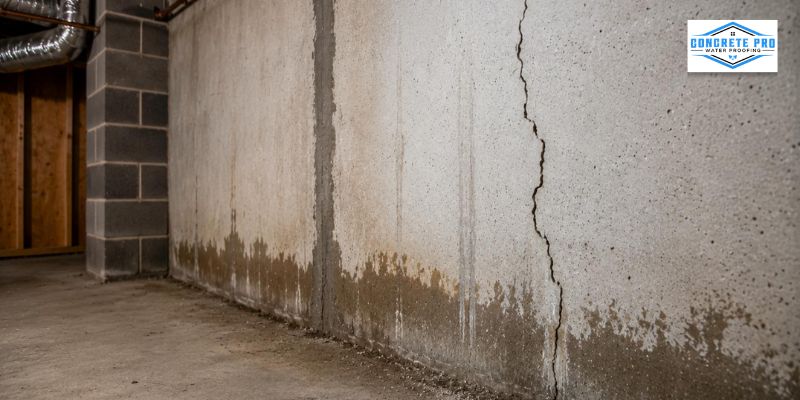
When groundwater accumulates in the soil surrounding a foundation, it can exert pressure against the walls. This is called hydrostatic pressure. If the pressure becomes excessive, particularly when drainage is inadequate, it may contribute to cracking, wall movement, and water intrusion.
The problem can become more noticeable after prolonged rainfall, seasonal groundwater changes, or drainage system failures.
Warning signs to watch for:
- Horizontal cracks in basement foundation walls.
- Damp patches or water seepage through concrete.
- White, powdery mineral deposits on basement walls.
- Foundation walls that appear to bow inward.
- Cracks that coincide with recurring basement leaks.
Horizontal foundation cracks deserve particular attention because they can sometimes indicate significant lateral pressure. If a wall is bowing, displaced, or visibly moving, seek prompt professional evaluation.
Depending on the cause, repairs may involve improving drainage, managing groundwater, waterproofing, or reinforcing the affected wall.
Important distinction: Waterproofing helps manage moisture, but it does not automatically resolve a structural problem. The appropriate repair depends on the underlying cause.
5. Tree Roots and Changing Soil Moisture
Trees can make a property more attractive, provide shade, and improve outdoor spaces. However, large trees growing near a house can sometimes contribute to foundation movement.
The main concern is often moisture rather than roots physically breaking through sound concrete. Trees absorb water through their roots, and in moisture-sensitive soils, this can cause the surrounding ground to dry and shrink. If the change occurs unevenly around a home, the foundation may experience differential movement.
The risk depends on several factors, including the tree species, its size, soil type, local climate, and the depth and design of the foundation.
Potential warning signs include:
- New cracks near areas with large, established trees.
- Foundation movement during prolonged dry weather.
- Uneven settlement near one side of the house.
- Changes in cracks following significant landscaping work.
However, a nearby tree isn't automatically responsible for a foundation crack. Other causes, including drainage problems and natural settlement, may produce similar symptoms.
What should homeowners do? Have the foundation and surrounding conditions assessed before removing a mature tree. Tree removal can change soil moisture patterns, and an abrupt change may create additional ground movement in some circumstances.
A foundation specialist or qualified arborist can help determine whether vegetation is contributing to the problem and what action is appropriate.
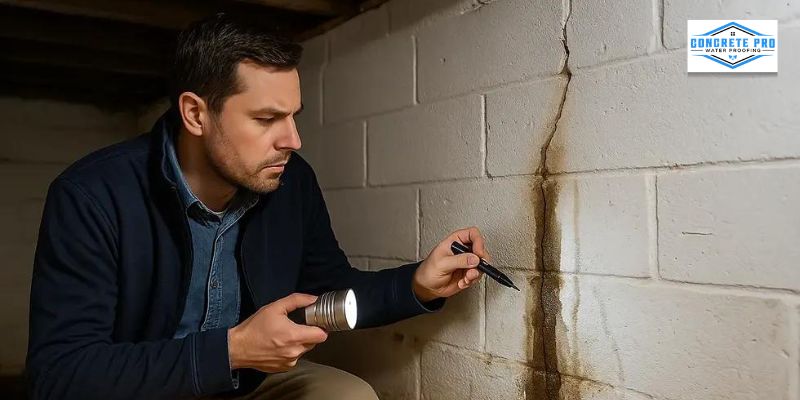
6. Construction Defects: When the Problem Begins Before You Move In
Not every foundation problem develops because of weather, water, or changing soil. Sometimes, the original construction plays a significant role.
A foundation must be designed and built to suit the building's loads, soil conditions, groundwater environment, and local requirements. If these factors aren't adequately addressed, the foundation may become more vulnerable to cracking over time.
Potential contributing factors include inadequate soil compaction, unsuitable concrete mixtures, poor curing practices, insufficient reinforcement, and foundation designs that don't account for site conditions.
In some cases, the effects appear shortly after construction. In others, weaknesses remain unnoticed until the building experiences years of soil movement, moisture changes, or other stresses.
Construction-related warning signs may include:
- Cracks that appear relatively early in a building's life.
- Repeated cracking in the same location after repairs.
- Uneven settlement or visible structural movement.
- Cracks associated with poorly constructed joints.
- Evidence of inadequate drainage or recurring moisture problems.
Identifying the cause may require reviewing construction records, inspecting the foundation, and evaluating the soil and drainage conditions.
Why does the root cause matter? Repairing the visible crack alone may provide only a temporary solution if the underlying construction or support problem remains unresolved.
Foundation Crack Detective: What Is Your Crack Telling You?
Foundation cracks can look similar while having very different causes. Use the following guide to understand what certain patterns may suggest.
|
Crack pattern or symptom |
Possible explanation |
Recommended response |
| Fine, narrow crack in concrete | Shrinkage or minor movement | Monitor if stable; investigate changes |
| Diagonal crack near a window or door | Possible differential settlement | Arrange an assessment if new or widening |
| Horizontal crack in a basement wall | Possible lateral soil or water pressure | Seek prompt professional evaluation |
| Crack accompanied by water seepage | Water intrusion or drainage issues | Investigate moisture sources and crack condition |
| Crack with a bowing or displaced wall | Possible structural distress | Obtain prompt professional assessment |
| Repeated cracks after previous repairs | Ongoing movement or an unresolved cause | Investigate the underlying problem |
(This table is a starting point, not a diagnosis. A professional assessment may be needed to distinguish between harmless cracking and a more serious foundation issue.)
When Should You Worry About a Foundation Crack?
Finding a crack doesn't automatically mean your home is unsafe. What matters is its location, whether it is changing, whether the concrete has moved, and whether other warning signs are present.
Pay closer attention if you notice:
- Increasing crack width: The crack is visibly growing over time.
- Structural displacement: One side of the crack sits higher or farther inward than the other.
- Water intrusion: Moisture repeatedly enters through the crack.
- Wall movement: A basement wall appears bowed or displaced.
- Related building changes: Floors become uneven or doors and windows begin sticking.
- Rapid deterioration: The crack changes significantly over a short period.
Photographing a crack and recording its approximate width can help track changes. However, monitoring should not delay professional assessment when there is substantial movement, rapid widening, a bowing wall, or another concerning symptom.
How Can You Help Prevent Foundation Cracks?
Not every foundation crack can be prevented. Concrete naturally changes as it cures, and some soil movement is unavoidable. Still, good property maintenance can reduce several common risks.
Five practical maintenance steps:
- Manage rainwater: Keep gutters clear and direct downspouts away from the foundation.
- Maintain appropriate grading: Prevent surface water from consistently flowing toward the house.
- Watch soil moisture: Avoid unnecessary, uneven changes in moisture around the foundation, particularly in expansive clay soils.
- Plan landscaping carefully: Consider mature tree size, root systems, and soil conditions when planting near the house.
- Inspect the foundation periodically: Look for new cracks, changes in existing cracks, damp areas, and signs of movement.
If your home already has foundation cracks, focus on identifying the cause before choosing a repair method. The right solution should address both the visible damage and the conditions that contributed to it.
Conclusion:
Foundation cracks can develop because of soil movement, poor drainage, concrete shrinkage, hydrostatic pressure, tree-related changes in soil moisture, or construction defects. Although some cracks are relatively minor, others can indicate a problem that deserves professional attention.
The most useful question isn't simply, How do I fill this crack? It's Why did the crack appear in the first place?
Understanding the cause helps homeowners make better decisions about maintenance, waterproofing, and foundation repair. It can also reduce the risk of spending money on a cosmetic fix when the underlying problem remains unresolved.
When in doubt, document what you see and consult a qualified foundation professional. A timely assessment can help you determine the next step and protect the long-term condition of your home.