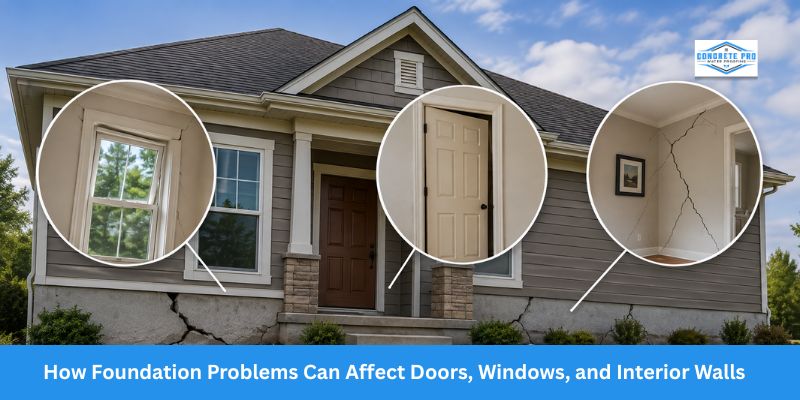
Your home’s foundation does more than support the structure; it keeps everything above it stable and properly aligned. When the foundation begins to shift, settle or crack, the effects often appear in places that you might not expect.
Have you noticed a door that suddenly won’t close, a window that sticks or new cracks appearing on your interior walls? While these issues may seem unrelated, they can all be early warning signs of foundation problems. Recognizing these symptoms early can help prevent more extensive structural damage and expensive repairs.
In this guide we’ll explain how foundation issues affect different parts of your home, what signs to watch for, and why addressing the problem early can help protect your home’s structural integrity and value.
Why the Foundation Matters
The foundation is responsible for distributing the weight of your home evenly across the ground. When soil movement, moisture changes, poor drainage, plumbing leaks or natural settling causes part of the foundation to move unevenly, the entire structure experiences stress. Even small amounts of foundation movement can create noticeable problems throughout your home.
1. Doors That Stick or Won’t Close Properly
One of the earliest and most common signs of foundation movement is a door that suddenly becomes difficult to open or close.
What happens?
When the foundation shifts, door frames become slightly twisted. Since doors are built to fit within perfectly square openings, even a small amount of movement can cause:
- Doors sticking at the top or bottom
- Doors rubbing against the frame
- Doors swinging open or closed by themselves
- Difficulty locking deadbolts
- Visible gaps around the door
Homeowners often assume that a door has swollen due to humidity; but if multiple doors throughout the home develop the same issue, foundation settling should be considered. Professional foundation stabilization and repair can identify the underlying cause and restore your home’s structural stability, before the damage worsens.
2. Windows That Become Hard to Open
Windows rely on precise alignment to operate smoothly. Foundation movement can distort window frames just enough to affect their function.
Common symptoms include:
- Windows that stick
- Difficulty locking windows
- Gaps around window frames
- Cracked glass (in severe cases)
- Air leaks and drafts
If multiple windows become difficult to operate at the same time, it’s important to have your foundation evaluated. Timely foundation repair and maintenance can help address structural movement, before it leads to more extensive damage.
3. Cracks in Interior Walls
Interior wall cracks are among the most visible indicators of foundation problems.
Not every crack is cause for concern. Small hairline cracks from normal settling are common in many homes; however, foundation related cracks tend to have distinctive patterns.
Warning signs include:
- Diagonal cracks extending from doors or windows
- Stairstep cracks
- Long horizontal cracks
- Cracks wider than ⅛ inch
- Cracks that continue growing over time
These cracks develop because the walls are responding to uneven movement beneath the home.
If cracks continue to expand, scheduling a Foundation Inspection can help identify whether foundation movement is the underlying cause.
4. Ceiling and Wall Separation
As different parts of the house move at different rates, joints between ceilings and walls begin to separate.
You may notice:
- Gaps where walls meet ceilings
- Crown molding separating from walls
- Baseboards pulling away
- Visible spaces in corners
Although these may appear to be cosmetic issues, they often indicate structural movement occurring beneath the surface.
5. Uneven or Sloping Floors
Foundation settling can cause floors to lose their level.
Signs include:
- Floors that slope noticeably
- Soft or bouncy areas
- Furniture leaning
- Objects rolling across the floor
- Cracks in tile flooring
While older homes may naturally have slight floor variations, sudden or worsening changes should be professionally evaluated.
Why These Problems Happen
Several factors contribute to foundation movement.
Expansive Soil
Clay rich soil expands when wet and shrinks during dry periods, placing continual pressure on foundations.
Poor Drainage
Water collecting around the home softens the supporting soil, causing portions of the foundation to settle unevenly.
Plumbing Leaks
Underground leaks can wash away supporting soil beneath concrete slabs, creating voids that lead to settling.
Tree Roots
Large trees absorb significant amounts of moisture from the surrounding soil, contributing to uneven drying and shifting.
Natural Settling
All homes settle somewhat over time; but excessive or uneven settling often requires professional evaluation.
Can These Problems Be Fixed?
The good news is that many foundation problems can be repaired successfully when addressed early.
Depending on the cause and severity, repair methods may include:
- Slab piers, to stabilize sinking concrete slab foundations
- Helical piers that anchor foundations into more stable soil, making them ideal for lighter structures and shifting soils
- Push piers that transfer the home’s weight to deeper, more stable load bearing soil or bedrock
- Crawl space supports, to reinforce sagging floors and structural framing
- Concrete lifting, to raise sunken slabs and restore level surfaces without full replacement
- Drainage improvements, to reduce excess moisture around the foundation
- Foundation crack repair, to help prevent water intrusion and further deterioration
After the foundation has been stabilized, many doors and windows return much closer to their proper alignment, while cosmetic wall repairs can be completed afterward.
When Should You Call a Foundation Professional?
Schedule an inspection if you notice several of these signs occurring together:
- Multiple sticking doors
- Windows that suddenly stop opening
- New interior wall cracks
- Uneven or sloping floors
- Foundation cracks
- Exterior brick cracks or deteriorating mortar joints
- Gaps around trim or molding
After structural repairs have been completed, brick sealing can help protect exterior masonry from moisture penetration and weather related deterioration.
The earlier foundation problems are diagnosed, the more affordable repairs typically are.
Preventing Future Foundation Problems
While not every foundation issue can be prevented, homeowners can reduce their risk by:
- Keeping gutters clean
- Directing downspouts away from the foundation
- Maintaining consistent soil moisture
- Repairing plumbing leaks promptly
- Improving yard drainage
- Scheduling routine foundation inspections
Preventive maintenance is often far less expensive than major structural repairs.
Final Thoughts
Foundation problems rarely remain confined to the foundation itself. They often reveal themselves through sticking doors, difficult windows, cracked walls, separating trim and uneven floors, long before major structural damage becomes obvious.
Recognizing these warning signs early allows homeowners to address the underlying cause, before repair costs escalate. If you’ve noticed multiple symptoms throughout your home, scheduling a professional foundation inspection is one of the best ways to protect your investment and avoid more costly repairs later.
Remember: Repairing cosmetic damage without addressing the underlying foundation issue is only a temporary solution. Whether your home needs Foundation Stabilization and Repair, Foundation Repair and Maintenance, Concrete Leveling, Foundation Drainage or Basement Waterproofing, resolving the structural problem first helps keep your home safe, stable and protected for years to come.