A concrete patio is one of the most durable and versatile additions to any home. It provides a functional outdoor living space for relaxing, entertaining, grilling, or simply enjoying your backyard. When installed and maintained properly, a concrete patio can last for decades.
However, like any outdoor surface, concrete patios are exposed to weather, moisture, soil movement, and everyday wear. Over time, these factors can lead to cracks, uneven surfaces, discoloration, and other issues that affect both appearance and safety.
Understanding the most common concrete patio problems, what causes them, and how to prevent them can help homeowners protect their investment and avoid costly repairs.
Why Concrete Patios Develop Problems
Concrete is incredibly strong under compression, but it's not immune to environmental changes. Seasonal temperature fluctuations, expanding and contracting soil, heavy loads, water infiltration, and improper installation can all contribute to patio damage.
While some minor imperfections are normal as concrete ages, larger issues may require professional attention to restore the patio's appearance and structural integrity.
1. Cracks in the Concrete
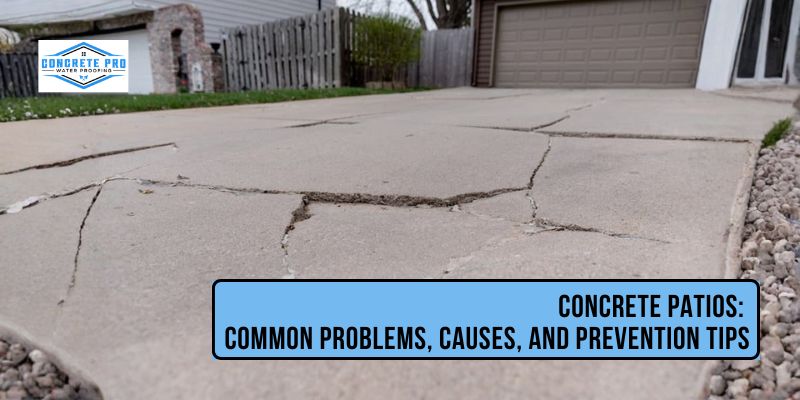
Cracking is one of the most common issues homeowners notice with concrete patios.
Small hairline cracks are often a normal part of the curing process and may not indicate a serious problem. However, larger or expanding cracks should not be ignored.
Common Causes
- Natural concrete shrinkage
- Soil settlement beneath the patio
- Freeze-thaw cycles
- Heavy outdoor furniture or equipment
- Tree root growth
- Lack of properly placed control joints
Prevention Tips
- Install adequate control joints to guide natural cracking.
- Ensure the base is properly compacted before pouring concrete.
- Avoid placing excessive weight on newly poured concrete.
- Seal cracks early before water can penetrate and make them worse.
2. Uneven or Sunken Patio Sections
A patio that has settled unevenly is not only unattractive but can also become a tripping hazard.
Sunken slabs often create low spots where water collects, accelerating further deterioration.
Common Causes
- Poor soil compaction
- Soil erosion beneath the slab
- Water washing away supporting soil
- Plumbing leaks under or near the patio
- Natural ground settlement
Prevention Tips
- Install patios on a properly prepared and compacted base.
- Improve drainage around the patio.
- Direct downspouts away from concrete surfaces.
- Address drainage issues promptly before erosion develops.
If settling has already occurred, concrete lifting techniques such as slab jacking or polyurethane foam injection can often restore the patio without complete replacement.
3. Surface Spalling and Flaking
Spalling occurs when the top layer of concrete begins to peel, chip, or flake away.
This not only affects appearance but can also shorten the patio's lifespan if left untreated.
Common Causes
- Freeze-thaw damage
- Poor-quality concrete mix
- Excess water added during installation
- Deicing chemicals
- Improper finishing techniques
Prevention Tips
- Apply a quality concrete sealer every few years.
- Avoid using harsh deicing salts whenever possible.
- Hire experienced contractors who follow proper finishing practices.
- Repair small damaged areas before they spread.
4. Standing Water and Poor Drainage
Water that pools on a concrete patio can create slippery surfaces and contribute to long-term deterioration.
Standing water also encourages mold, mildew, and algae growth.
Common Causes
- Improper patio slope
- Soil settlement
- Clogged drainage systems
- Low spots created by uneven settling
Prevention Tips
- Design patios with proper drainage and slope.
- Keep nearby gutters and drains clean.
- Correct low areas before water damage becomes severe.
- Inspect drainage after heavy rainstorms.
5. Discoloration and Stains
Over time, concrete patios may develop stains or uneven coloring.
While these issues are mostly cosmetic, they can make an otherwise attractive outdoor space appear neglected.
Common Causes
- Oil and grease spills
- Rust from patio furniture
- Leaves and organic debris
- Mold and algae growth
- UV exposure
- Hard water deposits
Prevention Tips
- Clean spills as soon as possible.
- Wash the patio regularly using mild cleaners.
- Remove leaves before they stain the surface.
- Reseal decorative concrete to protect its finish.
6. Expansion Joint Damage
Expansion joints allow concrete to move slightly as temperatures change.
When these joints deteriorate, moisture can enter beneath the slab and accelerate damage.
Signs of Damage
- Missing joint filler
- Crumbling edges
- Weed growth between joints
- Water collecting inside joints
Prevention Tips
- Inspect joints annually.
- Replace damaged joint sealant promptly.
- Keep weeds and debris out of expansion joints.
7. Mold, Mildew, and Algae Growth
Patios that remain damp or shaded for long periods are more likely to develop mold or algae.
Besides affecting appearance, algae can make the surface dangerously slippery.
Prevention Tips
- Improve sunlight exposure where possible.
- Clean the patio regularly.
- Trim nearby vegetation.
- Ensure proper drainage.
- Pressure wash when necessary using appropriate settings.
The Importance of Proper Installation
Many concrete patio problems begin long before the concrete is poured.
Professional installation includes:
- Proper soil preparation
- Compacted gravel base
- Correct concrete mix
- Adequate reinforcement
- Proper control joint placement
- Correct finishing techniques
- Appropriate curing time
Choosing an experienced contractor can significantly reduce future maintenance and repair costs.
Routine Maintenance Can Extend Patio Life
Regular maintenance is one of the easiest ways to keep your concrete patio looking great for years.
Simple maintenance includes:
- Sweeping away dirt and debris
- Washing the surface periodically
- Sealing the concrete every few years
- Repairing small cracks early
- Keeping drainage systems clear
- Avoiding harsh chemicals that damage concrete
A little preventative care can help homeowners avoid much larger repairs down the road.
When Should You Call a Professional?
Some concrete patio issues require more than routine maintenance.
Consider scheduling a professional inspection if you notice:
- Large or widening cracks
- Significant settling
- Multiple uneven sections
- Persistent standing water
- Extensive surface deterioration
- Patio movement near your home's foundation
Addressing these problems early often results in simpler, less expensive repairs.
Conclusion
Concrete patios are built to withstand years of outdoor use, but they aren't maintenance-free. Cracks, settling, drainage problems, surface damage, and discoloration can all develop over time, especially when installation or drainage issues are present.
The good news is that many of these problems are preventable with proper construction, routine maintenance, and timely repairs. By inspecting your patio regularly and addressing small issues before they become major ones, you can extend its lifespan, improve safety, and keep your outdoor living space looking its best for years to come.