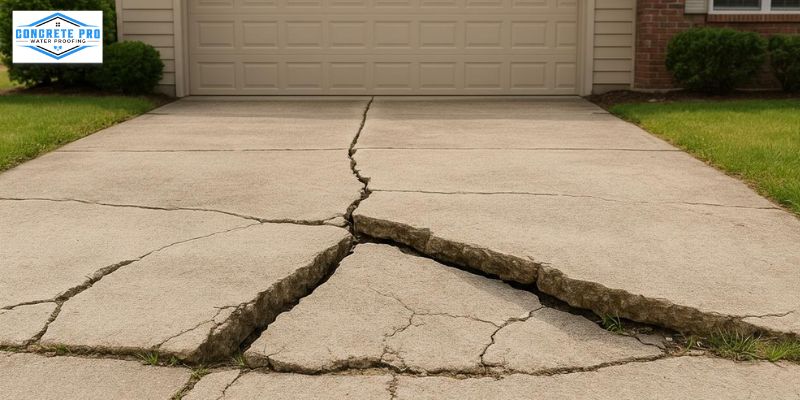
A cracked driveway. An uneven patio. A garage floor with chipped edges. Concrete problems often begin small, but deciding what to do about them can quickly become confusing. Should you patch the damaged area, level the surface, carry out a more extensive repair, or replace the concrete entirely?
The answer depends on more than what the damage looks like. The age of the concrete, the depth of the damage, the condition of the underlying soil, drainage, and the amount of movement all influence which solution makes sense.
The good news is that replacing concrete isn't always necessary. Many surface imperfections can be addressed with targeted repairs, while some uneven slabs can be lifted or levelled without removing the entire surface. However, when concrete has extensive deterioration or an unresolved structural problem, replacement may be the more practical long-term option.
So, before committing to a repair, let's explore what each solution involves, when it works best, and how to determine what your concrete really needs.
1. Patching: Is the Damage Only Skin-Deep?
Sometimes, concrete looks worse than it really is. Small chips, shallow cracks, minor surface spalling, and isolated areas of deterioration may be suitable for patching if the surrounding concrete remains sound.
Concrete patching involves removing loose or damaged material, preparing the affected area, and applying an appropriate repair compound. The goal is to restore the damaged section without disturbing the entire slab.
For example, imagine a small section of your garage floor has chipped near the entrance. If the surrounding concrete is stable and the damage is limited to the surface, a compatible patching product may restore the area without requiring a complete replacement.
However, patching is not a universal solution. Applying new material over loose concrete, active cracks, or an unstable surface can result in another failed repair. The damaged area must be prepared properly, and the underlying cause should be understood before work begins.
When is concrete patching a good option?
- Small chips and shallow surface damage.
- Localized spalling where the remaining concrete is sound.
- Minor, stable defects that do not involve significant slab movement.
- Small damaged areas where a compatible repair material can bond properly.
When might patching not be enough?
If cracks continue to widen, the slab moves under load, or the concrete is deteriorating across a large area, patching may only conceal the symptoms. In these situations, a more comprehensive repair or replacement assessment may be necessary.
The takeaway: Patching works best when the damage is localized and the concrete around it is still in good condition.
2. Leveling: What If the Concrete Is Uneven?
Have you ever noticed a sidewalk slab sitting higher than the one beside it? Perhaps rainwater collects in one corner of your patio, or your driveway has developed a noticeable dip.
These problems may indicate that the concrete has settled or moved. When the slab itself remains suitable for reuse, concrete leveling may offer an alternative to removing and replacing it.
Concrete leveling aims to correct differences in elevation by lifting or supporting the existing slab. Depending on the site conditions, contractors may use methods such as polyurethane foam injection or cement-based grout injection. Some applications use other lifting techniques appropriate to the slab and its surroundings.
The selected method depends on factors such as slab thickness, access, soil conditions, voids beneath the concrete, drainage, and the extent of the settlement.
Concrete leveling may be appropriate for:
- Uneven sidewalk sections that create trip hazards.
- Settled patio slabs that disrupt the surface.
- Driveway sections that have sunk but remain structurally sound.
- Concrete floors with localized settlement.
- Slabs with voids beneath them, provided the concrete can be safely supported.
The important distinction is that leveling addresses elevation and support. It does not automatically eliminate every crack or restore concrete that has seriously deteriorated.
If the slab is severely fractured, crumbling, or continuing to move because of an unresolved soil problem, lifting it may not provide a lasting solution.
The takeaway: If your concrete is uneven but otherwise in suitable condition, leveling may restore its position without the cost and disruption of full replacement.
3. Repairing: What If the Problem Goes Deeper?
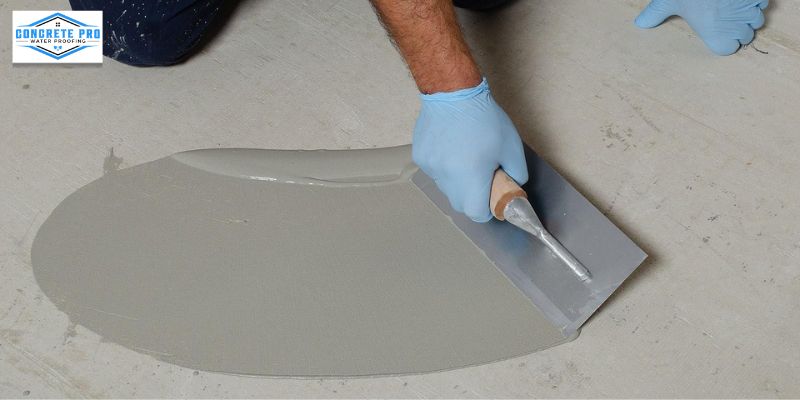
Not every concrete problem can be solved with a surface patch or a leveling treatment. Some damage requires a more targeted repair that addresses the concrete's condition, the forces acting on it, or the reason it has deteriorated.
Concrete repair is a broad category that includes different techniques for different problems. Depending on the damage, it may involve crack injection, removal and replacement of deteriorated sections, reinforcement repairs, joint restoration, or improvements to drainage and support.
For instance, a stable crack in a concrete wall may require a different repair approach from a crack that allows water to seep into a basement. Similarly, damaged concrete around exposed reinforcement may require removal of unsound material and treatment of the affected reinforcement before the section is restored.
A more extensive concrete repair may be needed when:
- Cracks allow water to penetrate the concrete.
- Deterioration extends below the surface.
- Concrete is breaking away around exposed reinforcement.
- Existing joints are damaged or failing.
- Localized structural damage requires professional assessment.
- The underlying cause can be corrected without replacing the entire slab or structure.
The right repair material and technique depend on the intended use of the concrete, exposure conditions, crack activity, and structural requirements.
For example, a flexible sealant may be appropriate for certain moving joints, while a structural crack may require engineering assessment before a repair material is selected. Simply filling every crack with the same compound can lead to disappointing results.
The takeaway: Repair is the broader solution when the problem involves more than surface damage but the affected concrete can still be retained.
4. Replacing: When Is Starting Over the Better Choice?
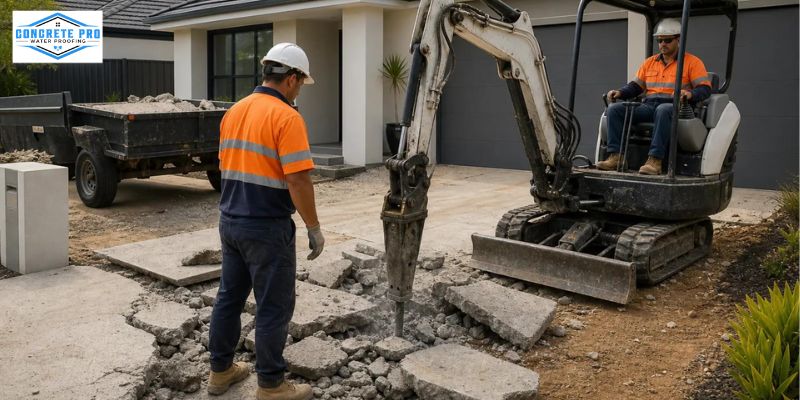
Sometimes, concrete has reached a point where patching, leveling, or localized repair is unlikely to provide a satisfactory result. In these cases, removing the damaged concrete and installing a new slab may be the more practical choice.
Replacement allows contractors to address the damaged material and, where necessary, correct problems with the underlying base, reinforcement, slab design, or drainage before installing new concrete.
Consider an old driveway covered in extensive cracking, crumbling edges, and multiple settled sections. If the slab has lost its integrity and the damage extends across much of the surface, repeatedly repairing individual areas may cost more over time than a properly planned replacement.
Concrete replacement may be worth considering when:
- Cracking and deterioration are widespread.
- Large sections of the slab are broken or unstable.
- The concrete has significant structural damage.
- Previous repairs have repeatedly failed.
- The slab's thickness, design, or condition is unsuitable for its intended use.
- The underlying problem requires reconstruction to correct.
Replacement generally involves more disruption than patching or leveling. Depending on the project, it may require demolition, debris removal, preparation of the subgrade, installation of a suitable base, reinforcement where specified, concrete placement, and appropriate curing.
It is also important to understand that new concrete will not automatically solve a drainage or soil problem. If the underlying cause remains, the replacement slab may experience similar damage.
The takeaway: Replacement makes the most sense when the existing concrete cannot be restored reliably or when rebuilding provides a better long-term solution.
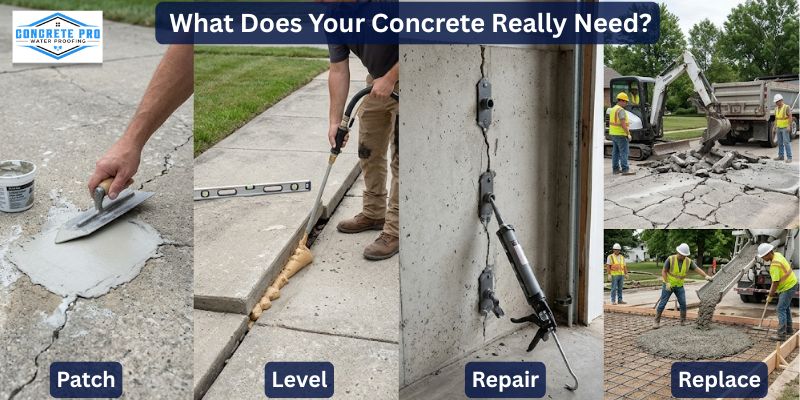
Patch, Level, Repair or Replace? Compare Your Options
Choosing the right concrete solution becomes easier when you compare the purpose, limitations, and typical applications of each method.
| Solution | Best suited for | Main benefit | Key limitation |
| Patching | Small, localized surface defects | Targets damage without replacing the entire slab | Won't correct underlying movement |
| Leveling | Settled or uneven but reusable slabs | Can restore elevation while retaining existing concrete | Doesn't restore severely deteriorated concrete |
| Repair | Cracks, localized deterioration, water intrusion, or specific defects | Addresses a particular problem using a suitable technique | Must match the cause and severity of the damage |
| Replacement | Extensive deterioration or seriously damaged slabs | Provides an opportunity to rebuild the affected area | Usually involves greater cost, demolition, and disruption |
These are general guidelines rather than fixed rules. A concrete professional should evaluate the slab's condition, intended use, and underlying support before recommending a solution.
5. What Factors Should You Consider Before Choosing?
The cheapest-looking repair is not always the most economical choice in the long run. Before deciding what to do, consider the following factors.
The extent of the damage: A small chip in an otherwise sound slab is very different from widespread crumbling or a network of deep cracks. Localized damage may be repairable, while extensive deterioration may justify replacement.
The cause of the problem: Concrete can crack because of shrinkage, settlement, temperature changes, overloading, corrosion of reinforcement, or other factors. If the cause remains active, even a high-quality repair may fail again.
The condition of the underlying soil: A slab may settle because the supporting soil has shifted, eroded, or compacted unevenly. Correcting the surface without addressing inadequate support may not solve the problem.
Water and drainage: Standing water, leaking downspouts, poor grading, and moisture penetration can contribute to concrete deterioration. Improving drainage may be an essential part of a lasting repair.
Safety and structural requirements: Uneven walkways can create trip hazards, while damaged load-bearing concrete may pose a more serious risk. Structural concerns should be assessed by an appropriately qualified professional.
Your long-term plans: The expected lifespan of the repair, the cost of repeated maintenance, access requirements, and the intended use of the surface can all influence the best option.
6. Common Concrete Problems and the Solutions They May Need
Different types of damage call for different responses. Here are a few common examples to help you understand the distinction.
Scenario 1: A few small chips on the garage floor
If the damage is shallow, isolated, and surrounded by sound concrete, patching may be sufficient. The damaged area should be cleaned and prepared, and the repair material should be suitable for the floor's expected loads and exposure.
Scenario 2: A sidewalk slab has sunk
If the slab is intact enough to be reused, leveling may be an option. However, the cause of the settlement and the condition of the soil beneath the slab should be assessed before lifting it.
Scenario 3: Water is entering through a basement wall crack
The solution may require crack repair and moisture management rather than a simple surface patch. If the crack shows movement or other structural warning signs, it should be professionally evaluated.
Scenario 4: An old driveway is crumbling in several places
Widespread deterioration may indicate that isolated patches will not provide a durable result. A contractor can compare targeted repairs with replacement after assessing the slab and the supporting base.
Scenario 5: A concrete floor has a crack with vertical displacement
This may indicate movement that a basic filler cannot correct. The cause should be investigated before deciding whether the slab can be stabilized or needs replacement.
These examples illustrate why the visible symptom is only part of the decision. The condition of the concrete and the cause of the damage are equally important.
7. How to Make Your Concrete Last Longer
Whether you patch a small defect, level a settled slab, or install entirely new concrete, ongoing maintenance can help protect your investment.
Here are some practical ways to reduce avoidable damage:
- Manage water properly: Keep drainage paths clear and prevent water from repeatedly pooling on or around concrete.
- Address cracks early: Investigate changes before small defects develop into larger maintenance problems.
- Maintain joints: Inspect control and expansion joints where appropriate, and repair damaged sealants with compatible materials.
- Use suitable repair products: Select products based on the concrete's condition, exposure, and intended use.
- Avoid unsuitable loads: Ensure the slab is designed for the vehicles, equipment, or structures it must support.
- Follow curing requirements: New concrete needs appropriate curing and protection to develop its intended properties.
- Schedule inspections when necessary: Seek professional advice if cracks widen, surfaces become displaced, or deterioration spreads.
Remember that maintenance cannot prevent every form of concrete damage. However, identifying problems early and correcting their underlying causes can help reduce unnecessary repairs.
Conclusion:
When concrete cracks, chips, settles, or deteriorates, the best solution isn't always the most extensive one. Patching can address localized surface damage, leveling may restore suitable but uneven slabs, targeted repairs can address specific defects, and replacement can provide a fresh start when the existing concrete is too damaged to retain reliably.
The key is to understand what caused the problem before choosing the repair method. Soil movement, water intrusion, surface deterioration, structural damage, and inadequate support require different approaches.
Before committing to a solution, assess the extent of the damage, consider the condition of the underlying base, and seek professional advice when structural concerns are present.
Don't replace concrete that can be reliably repaired, and don't keep patching concrete that needs a more comprehensive solution. A proper assessment helps you choose the right approach for safety, durability, cost, and long-term performance.