Your home's foundation may be made of concrete, but the ground supporting it is constantly changing.
Throughout the year, temperature, rainfall, snow, drought, and freezing conditions can affect the soil around your home. As that soil expands, contracts, becomes saturated, dries out, freezes, or thaws, it can place different types of stress on the foundation.
That doesn't mean every seasonal change will damage your foundation. A properly designed and maintained foundation can withstand normal environmental changes. However, repeated or extreme changes in soil and moisture conditions can contribute to movement and create problems over time.
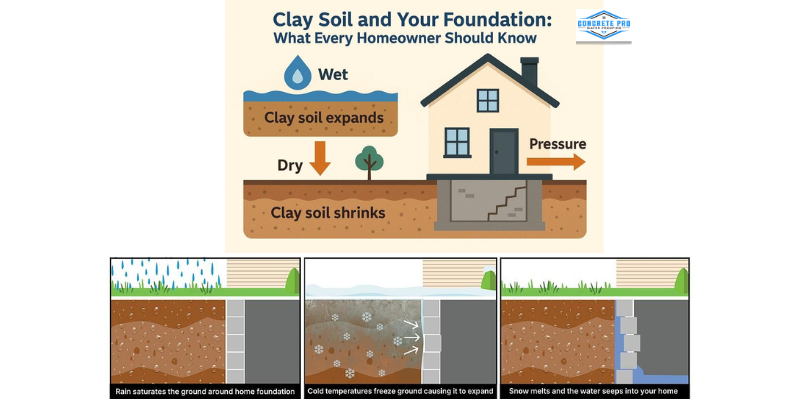
Understanding what happens during each season can help homeowners recognize early warning signs and address drainage or soil problems before they become more serious.
How Weather Affects the Soil Around Your Foundation
Before looking at individual seasons, it helps to understand the relationship between your foundation, soil, and moisture.
Your foundation transfers the weight of your home into the ground. That means the condition of the soil surrounding and supporting it matters significantly.
Soil doesn't behave the same way throughout the year. Its moisture content changes with rainfall, evaporation, drainage, groundwater, and temperature. Some soils remain relatively stable, while others can experience noticeable volume changes when they gain or lose moisture.
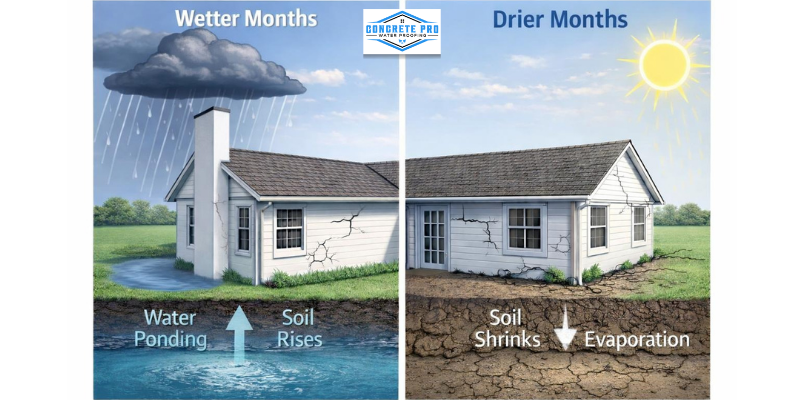
For example, certain clay-rich soils can expand when wet and shrink when dry. When these changes occur unevenly around a home, different sections of the foundation may experience different amounts of movement.
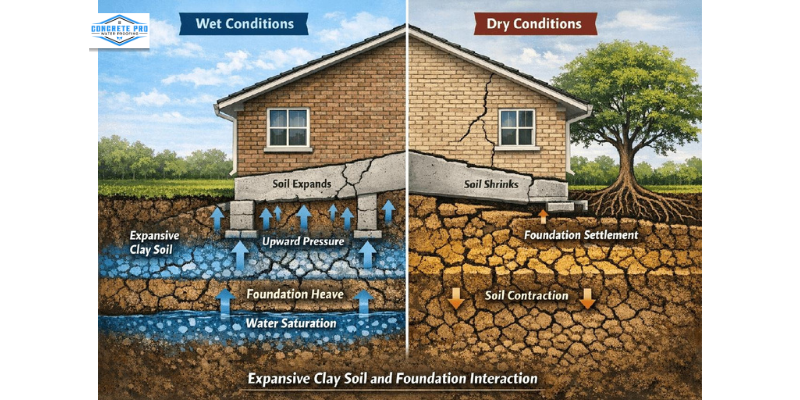
This is why foundation problems aren't always caused by one dramatic weather event. Sometimes, the bigger issue is the repeated cycle of changing conditions.
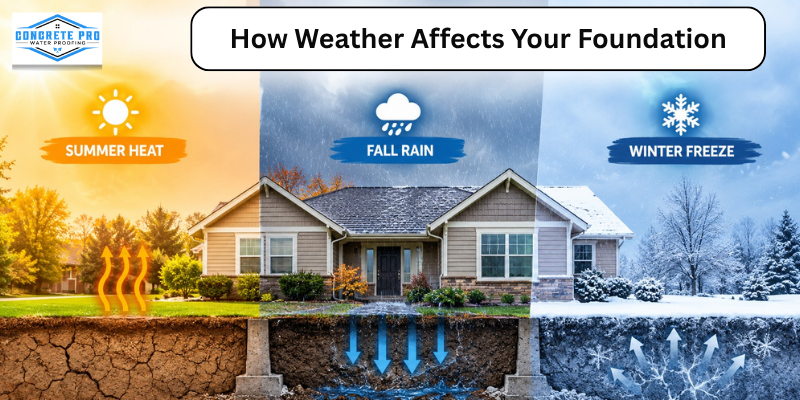
Summer Heat: When Soil Starts Losing Moisture
Summer can be hard on the soil around your foundation, particularly during prolonged periods of hot, dry weather.
As temperatures rise, moisture evaporates from exposed soil. Plants and trees can also draw water from the ground through their root systems. If the soil becomes significantly drier, some types of soil may shrink.
That change doesn't necessarily happen evenly.
The soil directly beneath a shaded area may retain more moisture than soil exposed to full sunlight. Similarly, soil close to large vegetation may lose moisture at a different rate from soil farther away.
When soil movement occurs unevenly, the foundation can experience changes in the support provided by the surrounding ground.
What homeowners may notice
During or after a particularly dry summer, keep an eye out for :
- New foundation cracks
- Existing cracks becoming more noticeable
- Doors or windows becoming difficult to open
- Gaps around doors or windows
- Uneven floors
- Separation between walls and ceilings
- Soil pulling away from the foundation
Not every one of these signs automatically means there is foundation damage. Homes naturally move and settle to some degree. However, new or progressively worsening symptoms deserve attention.
Trees and Summer Soil Conditions
Trees can be an important consideration when evaluating soil moisture around a foundation.
Large trees require substantial amounts of water, and their roots can extend considerable distances through the surrounding soil. During dry weather, vegetation may compete with the surrounding ground for available moisture.
This doesn't mean that every tree near a home is a foundation threat, and removing a tree without professional advice can create its own problems. The type of soil, tree species, distance from the structure, climate, drainage, and existing foundation conditions all matter.
The important point is to recognize that vegetation can influence soil moisture, particularly during hot and dry periods.
Fall Rain: When Dry Soil Becomes Saturated
After a hot summer, fall can bring a significant change in soil conditions.
Rain replenishes moisture in the ground. If rainfall is heavy or drainage is poor, the soil around the foundation may become saturated.
This can change the way the soil behaves and can increase water pressure against foundation walls, particularly when drainage systems aren't functioning properly.
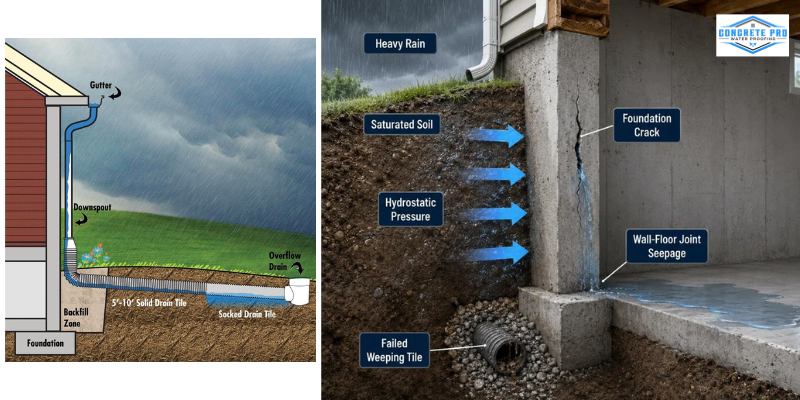
The problem isn't necessarily rainfall itself. A properly graded property with functioning gutters, downspouts, drainage systems, and appropriate soil conditions can handle substantial amounts of rain.
Problems are more likely when water is allowed to repeatedly collect beside the foundation or enter areas where it shouldn't.
Why Gutters and Downspouts Matter
Your roof collects a surprisingly large amount of rainwater.
Without properly directed downspouts, that water can be discharged directly next to the foundation.
During heavy rainfall, the resulting concentration of water can saturate the soil close to the house and contribute to drainage problems.
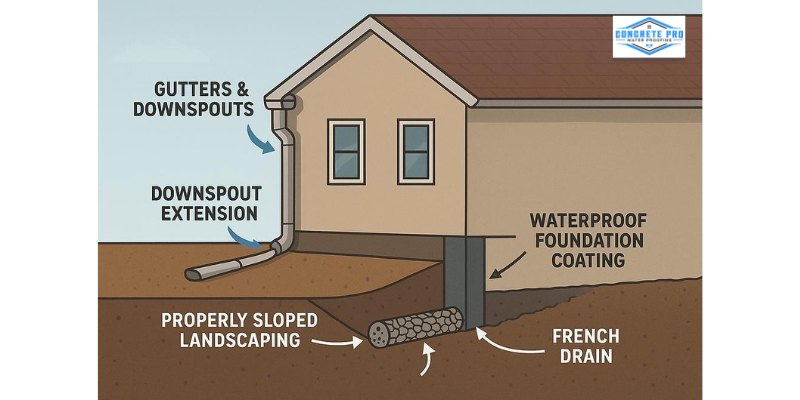
A simple inspection can reveal obvious problems.
Check whether:
- Gutters are clogged
- Downspouts are disconnected
- Water is discharged too close to the house
- Soil slopes toward the foundation
- Water consistently pools near foundation walls
- Drainage outlets are blocked
These aren't just fall maintenance tasks. Managing water around your home is a year-round foundation maintenance strategy.
Winter Freeze: When Water in the Soil Turns to Ice
In regions where temperatures regularly fall below freezing, winter introduces another environmental factor: frozen soil.
When water in soil freezes, it expands. Depending on soil type, moisture conditions, temperature, and drainage, freezing can contribute to upward movement of the ground known as frost heave.
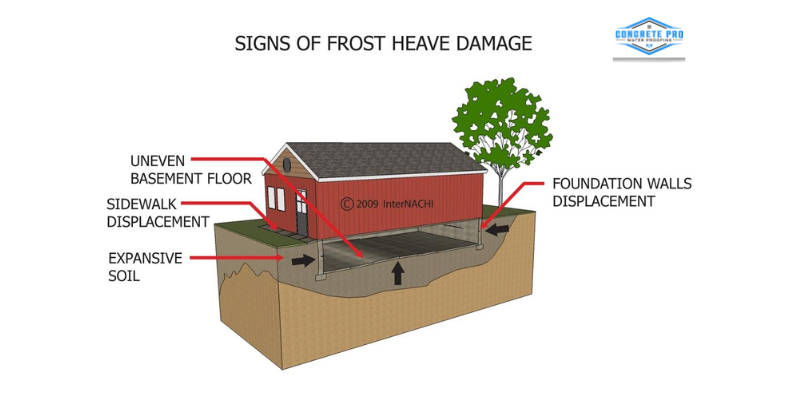
Structures designed for cold climates take local frost conditions into account. Building codes and construction practices may require foundations to extend below the local frost depth or use other methods appropriate for the climate.
However, existing homes can still experience problems when drainage, soil conditions, or construction details create uneven movement.
The Freeze-Thaw Cycle Can Be Especially Hard on Concrete
Winter doesn't always mean the ground freezes once and stays frozen until spring.
In many climates, temperatures fluctuate around the freezing point.
- Water freezes.
- Then temperatures rise.
- The ice melts.
- Water moves into cracks, pores, joints, and surrounding materials.
- Then temperatures drop again.
- The water freezes once more.
This repeated freeze-thaw cycle can contribute to deterioration of concrete and other materials over time.
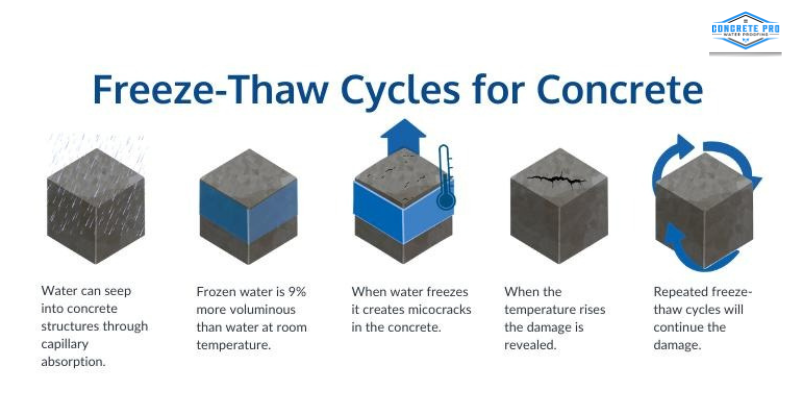
This is particularly relevant to exposed concrete surfaces, steps, walkways, driveways, and other structures around the home.
A small crack can allow water to enter. If that water repeatedly freezes and thaws, the surrounding material can experience additional stress.
Spring: The Season of Changing Conditions
Although the title focuses on summer, fall, and winter, spring is an important part of the foundation story.
As frozen ground begins to thaw, soil moisture can change rapidly. Snowmelt and spring rainfall can also introduce large amounts of water into the surrounding soil.
This makes spring a useful time to inspect your property.
Look around the foundation for areas where:
- Water has collected
- Soil has settled
- New cracks have appeared
- Landscaping has changed the drainage path
- Downspouts aren't directing water away
- Soil has pulled away from foundation walls
Spring can essentially reveal the effects of what happened during the previous seasons.
The Real Problem: Repeated Seasonal Movement
One summer probably isn't going to destroy a properly constructed foundation. One rainfall event isn't automatically a foundation emergency. One winter freeze doesn't necessarily mean your foundation has been damaged.
The bigger concern can be repeated cycles of soil and moisture movement.
Consider this sequence:
Summer
- Soil dries and potentially shrinks.
Fall
- Heavy rainfall increases soil moisture.
Winter
- Water freezes in cold climates.
Spring
- Frozen ground thaws and moisture conditions change again.
Summer
- The cycle starts over.
When these changes happen unevenly, they can contribute to differential movement around the foundation.
That's why looking at the entire seasonal cycle can be more useful than focusing on one particular weather event.
What Foundation Warning Signs Should You Watch For?
Weather-related foundation movement can show up in several ways.
Cracks in Foundation Walls
Small cracks can have many causes, and their location, size, orientation, and progression matter. A new crack that continues to change should be documented and evaluated rather than ignored.
Cracks Around Windows and Doors
Changes in the surrounding structure can sometimes appear around openings because these areas already have points where stresses are concentrated.
Doors and Windows That Stick
If doors or windows suddenly become difficult to open or close, it may be related to humidity or ordinary seasonal changes. But persistent changes accompanied by other symptoms may warrant inspection.
Uneven Floors
Noticeable changes in floor level can sometimes be associated with movement of the supporting structure or soil.
Gaps and Separation
Look for unusual gaps between:
- Walls and ceilings
- Walls and floors
- Doors and frames
- Exterior walls and attached structures
Again, these signs aren't proof of foundation failure on their own. The overall pattern matters.
How Can You Protect Your Foundation From Weather?
You can't control the weather, but you can control many of the conditions around your home.
The most important place to start is water management.
Keep gutters clean and make sure downspouts discharge water away from the foundation. Check the grading around your property so that surface water isn't consistently directed toward the house.
During dry weather, avoid making sudden changes to the moisture conditions immediately around the foundation without professional guidance. Irrigation, landscaping, large trees, and drainage modifications can all affect soil moisture.
In colder regions, homeowners should also pay attention to winter drainage and areas where water may collect and freeze.
Don't Ignore Small Changes
Foundation problems don't always announce themselves with a large crack across a wall.
- Sometimes the first clue is a door that suddenly sticks.
- Sometimes it's a small crack near a window.
- Sometimes it's water collecting beside the house after a storm.
- Sometimes it's a noticeable change in the ground around the foundation.
These signs may have simple explanations, but documenting them can help you recognize whether something is changing over time.
Take photographs, note when you first noticed the issue, and monitor whether the condition appears to be getting worse.
When Should You Call a Professional?
A professional inspection can help determine whether a visible symptom is related to normal seasonal movement, drainage, soil conditions, or a more significant foundation concern.
Consider having the issue evaluated if you notice progressive cracks, significant wall movement, persistent water intrusion, substantial settlement, noticeably uneven floors, or multiple warning signs appearing together.
The purpose of an inspection is not simply to look at the crack. A proper evaluation considers the foundation, surrounding soil, drainage, grading, moisture conditions, and the history of the property.
Conclusion: Your Foundation Experiences Every Season
Your foundation doesn't experience summer, fall, and winter separately. It experiences the continuous cycle of changing temperature and moisture conditions.
Summer heat can dry the soil. Fall rain can increase moisture. Winter freezing can affect water within the soil and concrete in cold climates. Spring thaw can bring another round of moisture and ground movement.
Not every seasonal change causes foundation damage, but understanding how these conditions interact can help homeowners recognize potential problems earlier.
The best foundation maintenance strategy starts with something relatively simple: keep water under control, pay attention to changes around your home, and investigate persistent or worsening symptoms.
Your foundation supports everything above it. By paying attention to what is happening around and beneath it throughout the year, you can catch potential problems before they become much harder to address.