The foundation is literally the section that makes the whole house stable, flat and secure. What most people do not know is that water and moisture are the largest long-term dangers to that foundation. When water is left standing around or under the base, it is not only a bother. As time progresses, it can cause cracks, movement, mold and even severe structural damage.
In this blog we will examine the effects of moisture on foundations, the most effective control measures and the proactive measures that can increase the longevity of a foundation, saving both money and frustrations in the future.
Understanding the Threat: How Water Harms Foundations
Water in Liquid and Vapor Form
The humidity surrounding a foundation comes in two types.
Liquid water, as a result of rain, pooled groundwater or inadequate drainage, can seep straight into the soil and foundation material.
Meanwhile, water vapor flows through soil and porous substances and is able to get into crawl spaces or basements, as long as it remains uncontrolled.
Both forms contribute to deterioration.
Hydrostatic Pressure and Soil Saturation
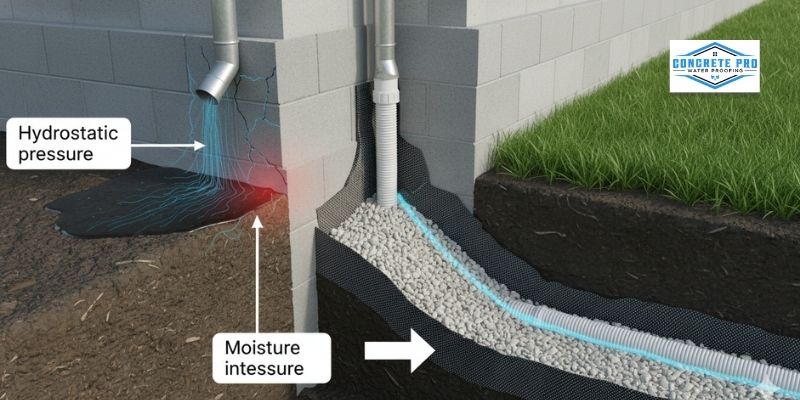
The accumulation of water in the soil at the base elevates hydrostatic pressure: the force that exerts pressure on foundation walls and slabs. This pressure may lead to cracking, bowing and undesired shifting in the long run.
Saturated soil also fails in its capacity to maintain equilibrium, in regard to weight. This may lead to unequal settlement and structural issues.
Moisture’s Hidden Impacts
It does not end with structural troubles. High moisture levels encourage the growth of mold and mildew, which may cause health issues, particularly when crawl space or basement air circulates within the home.
Moisture might also lower insulation performance and accelerate the deterioration of the materials.
Key Components of Effective Moisture Control
1. Surface Water Management
One of the most effective measures is to prevent water from reaching the foundation from the outset:
- Landscape the site. Grade the soil, so water drains away (usually at least five to six inches per 10 feet of yardage).
- Clean gutters and downspouts with extensions that have the capability to expel water several feet off the foundation.
- Use drainage piles and swales, to make sure rainwater does not collect around walls.
These basic steps minimize the amount of water that seeps into the soil around the foundation.
2. Subsurface Drainage Systems
Despite good surface control, groundwater may settle below grade. Here we have drainage on the subsurface:
- Footing drains drain away water, before it exerts unsafe stress on the foundation walls.
- Sump pumps are capable of draining water collected in basements or crawl spaces.
- Drainage lines with perforations and gravel on them assist in the removal of water around critical locations.
These systems minimize hydrostatic pressure and prevent water from resting against foundation walls, providing strength and longevity.
3. Waterproofing and Vapor Barriers
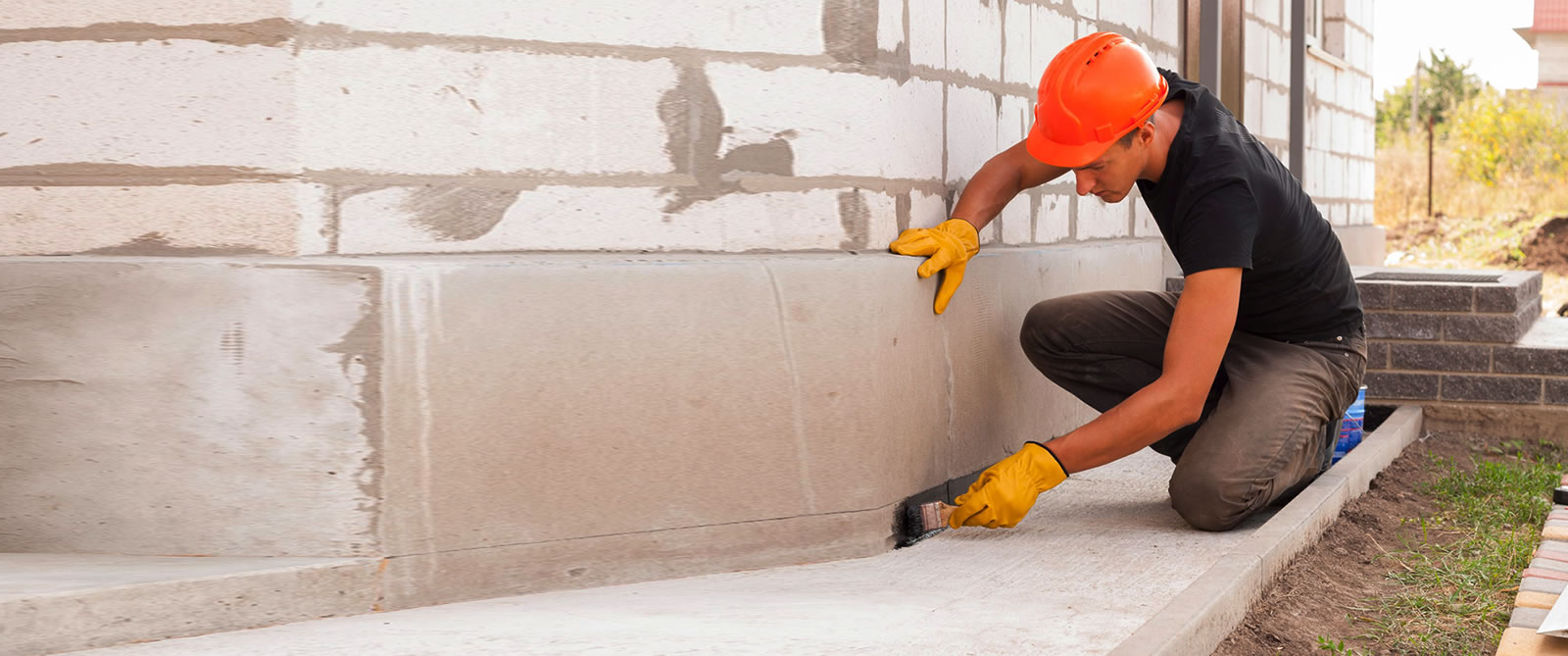
Physical barriers—either membranes coated over the walls of the exterior foundation or vapor barriers in crawl spaces—prevent the ingress of moisture:
- Waterproofing membranes are exterior waterproofing materials that present a water resistant barrier.
- Internal vapor barriers are used to contain moisture that seeps into the floor.
- Vapor diffusion retarders are used together with insulating systems, to minimize the movement of moisture through materials.
These methods enhance the foundation’s defense against liquid and vapor intrusion.
4. Moisture Removal and Air Control
Humidity should also be controlled in completed basements or enclosed crawl spaces:
- Dehumidifiers designed for use in basements or crawl spaces considerably reduce relative humidity levels.
- Sealed crawl space and proper ventilation strategies manage humidity levels, without bringing external moisture into the crawl space.
Introduction of such systems ensures healthier indoor air and eliminates the accumulation of moist conditions that degrade materials.
Benefits of Proactive Moisture Control
- Strengthening Structural Integrity: The major objective of moisture control is to maintain the physical strength of your foundation. This is achieved through maintaining dry and well-built soil and waterproof walls, ensuring that the foundation does not crack, settle or deform with time.
- Reducing Repair and Maintenance Costs: The price of foundation repair—correction (cracks), replacement (broken walls) or stabilization (uneven settlement)—is much, much more expensive than the price of moisture control systems. Timely prevention of water damage reduces costly interventions in the future.
- Enhancing Indoor Air Quality and Home Value: Houses that have moisture regulated basements or crawl spaces are not prone to mold, mildew and wet smells. This enhances indoor air quality, comfort and home value.
- Energy Efficiency and Comfort: Controlled humidity and dry insulation will lead to high thermal performance and minimized pressure on heating and cooling systems, translating to reduced energy costs and comfort throughout the year.
Practical Steps That Homeowners Can Take Today
The following list will help you begin controlling moisture and keeping your foundation dry:
- Check gutters and downspouts at least twice a year.
- Perform soil regrading in required areas.
- Deal with pooling water and water that tends to stand after storms.
- Install or repair drainage systems, such as French drains.
- Cover crawl spaces or basements with vapor barriers.
- Consider purchasing a dehumidifier, if the humidity level is consistently high.
The difference between a foundation that will last and one that will require expensive repair is proactive maintenance.
Conclusion
Water and moisture are unstoppable forces that will always have an impact over time. The foundation of your home is the first thing to feel the effects of these forces; however, with effective moisture control measures in place, you can significantly extend your foundation’s lifespan. This is not just about fixing the problems that come up; it is about protecting the future of your home and your peace of mind.
If you are ready to take action to protect your foundation with effective moisture control measures, contact Concrete PRO.