
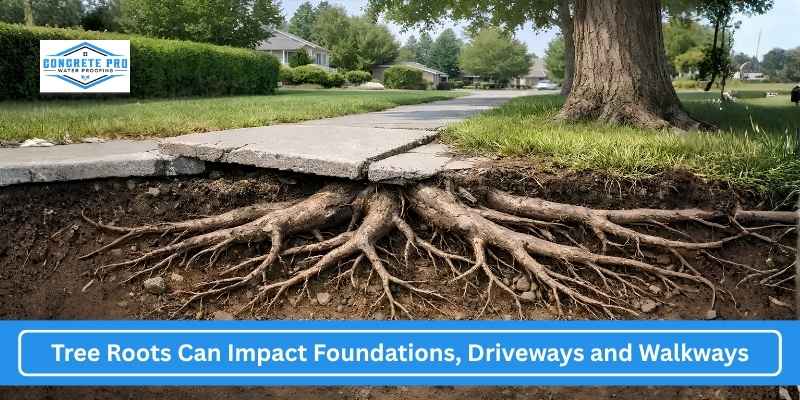
Trees provide aesthetic value, cooling effects and other environmental advantages for homes and businesses alike; but while trees bring numerous benefits aboveground, their roots below the surface can present homeowners with difficult problems. In pursuit of water and nourishment, roots will grow to such an extent that they may begin to negatively impact the foundations, driveways, sidewalks and other features of a property.
Learning how tree roots impact your property allows you to address any issues early on. Property owners can also work with the professionals at Concrete PRO to identify foundation, drainage and concrete issues, before they result in costly structural repairs.
How Do Tree Roots Develop?
Tree roots are often thought of as growing deep underground; however, many trees develop shallow root systems that spread horizontally through the upper layers of soil. These roots absorb water, oxygen, and essential nutrients needed for the tree's growth and health.
In Ohio, many tree species develop root systems that extend beyond the canopy's drip line, although the extent of root growth varies depending on the species, soil type, moisture levels, and overall growing conditions.
How Do Tree Roots Impact Foundations?
Changes in Soil Moisture Content
The most common factor by which tree roots affect foundations is soil moisture content. Tree roots consume a great amount of water, which is absorbed from the soil.
For soil containing large concentrations of clay, a decrease in moisture results in shrinking of the soil and an inability to provide sufficient support for the foundation.
On the other hand, removal of roots or felling of the tree may result in soil expansion, due to increased moisture content.
Foundation Cracking
Tree roots cannot actually crack concrete foundations; however, they can exploit already established cracks or weak points found within the concrete. As roots continue to grow inside the crack, they may eventually expand it.
Signs of a cracked foundation include the following:
- Wall cracks, either inside or outside the building
- An uneven floor surface
- Stuck doors or windows
- Window frame gaps
- Cracked foundation surfaces
Foundation Movement
Trees planted too close to buildings can also cause uneven settlement of the foundation, due to continued removal of water from the soil under different sections of the building. If you notice signs of foundation settlement or movement, a professional foundation repair evaluation can help determine the cause and recommend the appropriate solution.
Impact on Driveways
Lifting and Cracking
Tree root damage is common, when it comes to driveways. As they increase in size, roots apply upward pressure underneath the pavement.
This could lead to:
- Pavement lifting
- Cracks in the concrete slab
- Uneven pavement surface
- Displaced pavers
Drainage Issues
Root growth underneath a driveway might affect the surface grade, causing drainage issues. Water can begin to accumulate in spots, leading to rapid degradation and higher chances of developing cracks.
Reduced Service Life
Driveways exposed to root intrusion require repairs and might need replacing much earlier than you initially expected. Early detection and elimination of roots helps increase the life of the driveway.
How Tree Roots Damage Walkways
Walkway Trip Hazards
An obvious consequence of roots growing under walkways is unevenness, as roots can cause concrete sections to rise up and pose a risk of tripping.
Property owners could be faced with:
- Liability risks
- Access issues
- Pedestrian safety issues
- High repair costs
Sidewalk Cracking
The pressure exerted by tree roots on the material used in the construction of sidewalks may lead to cracking.
A lot of money goes into repairing sidewalks that have been invaded by tree roots.
Displacement of Pavers/Stones
Sidewalks that comprise paving blocks or natural stones are also affected by tree roots. The roots may displace them, resulting in an uneven surface.
Common Trees Known to Have Root Issues
Certain trees tend to pose problems more frequently, because of their fast spreading roots. Not all of the trees in the following list will necessarily create difficulties, but they need special care.
Potential problem species include:
- Willows
- Silver maples
- Poplars
- Elms
- Aspens
- Sycamores
- Ficus
- Eucalyptus
Determining factors include soil type, climatic conditions, availability of water and closeness to structures.
Indicators of Tree Root Damage
Early detection helps avoid major repairs. Check for the following indicators:
- Craze marks on driveways or walkways
- Uneven pavement
- Foundation cracks
- Doors and windows sticking
- Leaning retaining walls
- Bulging areas on concrete
- Water drainage problems or pooling issues
- Surface roots
Preventing Tree Root Damage
Selecting the Correct Tree
One of the most effective preventive actions is selecting the right tree. Consider the eventual size of the tree, along with the type of roots that it may have.
Maintaining Sufficient Distance
It is critical to maintain sufficient distance between the building and driveways, as well as around utility lines. The larger the tree, the greater the distance required.
Installing Root Barriers
Root barriers refer to physical barriers put up underground, to direct the growth of tree roots.
Routine Tree Inspection
Inspection of trees by skilled arborists may detect any issues arising from tree roots that require prompt action. The solution to such problems will usually be cheaper than making structural repairs.
Correct Soil Moisture Levels
Watering practices can minimize any unnecessary movement of roots.
What to Do If Roots Are Already Causing Damage
Where the roots of the trees have already caused damage to your property, there are various options open to you.
Root Pruning
Careful root pruning might limit future damage; however, it must be done professionally, to ensure that the tree doesn’t suffer any instability.
Reconstruction of Hardscape Areas
Walkways and driveways that have been damaged may need to be leveled or replaced altogether, depending on how much damage there is.
Installing Root Barriers
Though the problem might have occurred already, installing root barriers will help to prevent their growth near structures.
Tree Removal
If all else fails and the problem continues to grow worse, tree removal becomes the most sensible option.
If you notice foundation cracks, uneven concrete or drainage issues caused by tree roots, scheduling a professional foundation repair evaluation can help determine the best solution, before the damage worsens.
Conclusion
Trees provide a host of benefits, from helping the environment to providing curb appeal; however, when growing too close to buildings, driveways and paths, their root systems make them dangerous to nearby structures. Knowing how trees develop and understanding danger signs make it easier for homeowners to secure their investment and prevent expensive restoration.
Proper choice of trees and strategic planting will allow you to enjoy the benefits of trees, without risking the structural integrity of your home or business.