One question that homeowners often ask when upgrading an outdoor space—whether it is a driveway, patio or walkway—is “Which is better: stamped concrete or traditional paving?”
Factors such as cost, durability, maintenance and design flexibility make the right choice less than obvious. Both choices can make a house look great on the outside, but provide vastly different experiences over time.
Understanding the Two Options
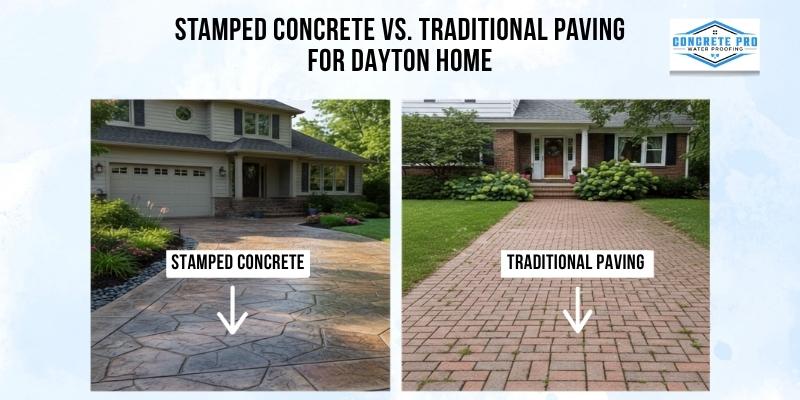
Stamped concrete is a poured concrete surface that is textured and colored, to produce a surface that looks like stone, brick, slate or even wood. It provides a continuous decorative effect, but retains a sturdier slab on the bottom.
Traditional paving typically relates to specific paving units, such as concrete pavers, brick or stone, which are laid in a pattern over a prepared base.
One is a continuous surface; the other is modular and segmented. That simple distinction has an impact on virtually all other aspects.
1. Appearance and Design Flexibility
Stamped concrete can be stunning, if you desire a clean, seamless appearance. Stamped concrete can replicate the appearance of high-end materials at a lower cost; you don’t need natural stone or brick, to get a luxurious look. Patterns, colors and textures can be customized to a great degree and can be used in modern, rustic or classic home designs.
Traditional paving, on the other hand, allows for more unique patterns. Some people prefer individual pavers, because of the handcrafted look that they create.
In brief, stamped concrete looks smoother and more seamless. Traditional paving offers a more segmented and architectural look.
2. Cost Considerations
In most projects budget is a factor of great significance.
The upfront cost of stamped concrete is typically lower than traditional paving options, since it is poured in one piece. It does not require much manual placement and labor, lowering the cost of installation.
The cost of traditional paving is generally higher at first, as it is more labor intensive (involving individual placement, leveling and securing of each piece) and materials cost more.
3. Durability and Longevity
Both options are durable, but they handle stress differently.
While stamped concrete is strong when installed as a solid slab, it may crack over time, particularly in climates with freeze-thaw cycles, like Ohio’s. Periodic sealing and maintenance are also necessary to maintain appearance.
Traditional paving systems are composed of individual units that can slightly bend with movements of the ground. If damage occurs, only the damaged portion—rather than the entire surface—will need to be replaced.
Though stamped concrete is strong by all measures, traditional paving has advantages in terms of repairs.
4. Maintenance Requirements
Maintenance is another important factor to consider.
To preserve the surface and color of stamped concrete and to help prevent cracking, it needs to be resealed every few years. Without this important step, fading or surface wear can occur over time.
Traditional paving generally requires less surface treatment, although it may require joint sand replacement, weed control between gaps or occasional leveling.
In simple terms:
- Stamped concrete: Relatively maintenance free, but must be sealed from time to time
- Traditional paving: Easier repairs, but more joint maintenance required
5. Safety and Surface Performance
Safety should be a priority, especially where pathways and driveways are concerned.
Traditional paving typically has a textured surface and a jointed design, which helps create a more slip resistant surface. This can provide better traction in wet conditions.
Unless treated with antislip agents, stamped concrete may be slippery in some instances (depending on the finish of the concrete).
If surface grip and stability are important considerations, this is something to weigh.
6. Installation Time and Disruption
Stamped concrete is normally quicker to install, as it is poured and finished in one area. This can help reduce overall project time.
Traditional paving has a longer installation time, as each unit will need to be individually placed, aligned and secured.
In situations in which speed is a factor, stamped concrete may come out on top.
Which One Is Better for Dayton Homes?
Neither option clearly stands above the other. The right choice depends on your priorities.
Select stamped concrete, if you would like:
- A clean and attractive appearance
- Faster installation
- Lower upfront cost
- The choice of many different designs
Choose traditional paving, if you prefer:
- Easier repairs over time
- Better traction in wet conditions
- A classic segmented look
- Strong long-term flexibility
When done right, either can make a big difference in your property’s curb appeal.
Conclusion
While there are many advantages to both stamped concrete and traditional paving, there are some differences in the types of needs that they address. One’s strength is visual continuity and cost efficiency. The other offers flexibility and easier long-term repairs.
When it comes down to it for Dayton homeowners, the best solution is the one that matches your lifestyle (how you intend to use your outdoor space), your willingness to do some maintenance and the overall appearance that you’re looking for. A professional appraisal will allow you to best see which of the options is most suitable for the property and your plans.
Making concrete decisions does not need to be a complicated process, but it does need to be an informed one. For professional guidance, contact Concrete PRO today!